Flu Season: Prevention Habits That Actually Stick
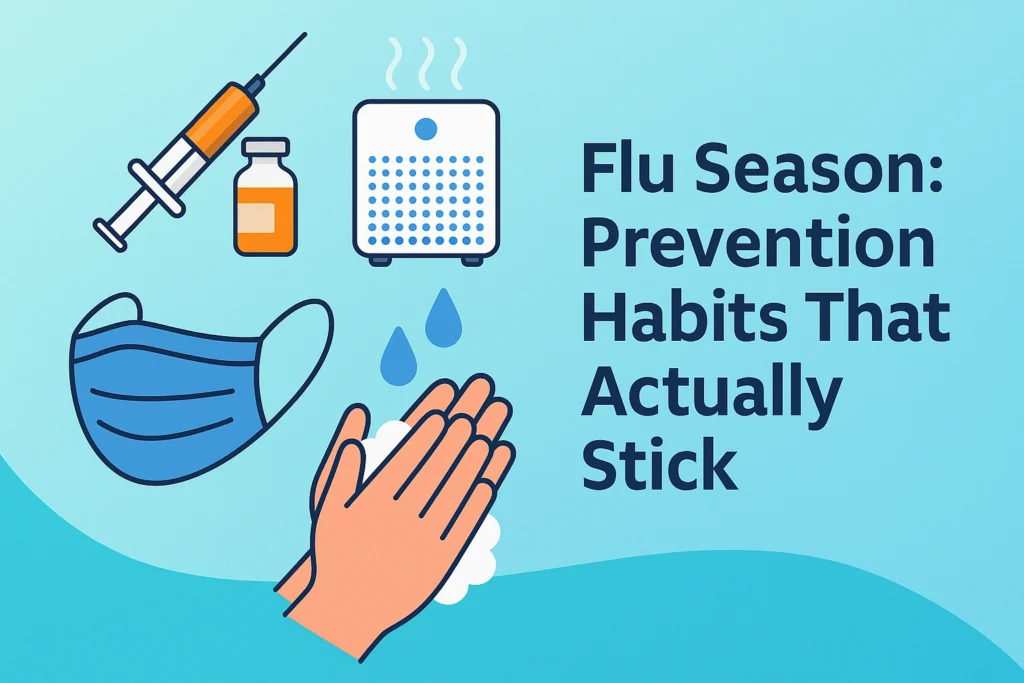
Table of Contents
TL;DR (one-minute plan)
- Get your flu shot each season—ideally by the end of October—and even later if viruses are still circulating.
- Keep indoor air fresh or filtered: 10–15-minute window bursts or run a HEPA purifier when people gather.
- Mask smartly in crowded indoor spaces during local surges (transit, clinics, busy shops).
- Hands + face rules: wash 20 seconds, use ≥60% alcohol sanitizer, avoid touching eyes/nose/mouth.
- Daily resilience: sleep 7–9 hours, hydrate, and move 30 minutes most days.
- If symptoms start: isolate early, rest and hydrate, and contact a clinician promptly if you’re high-risk.
Why “flu season” keeps catching people off guard
Every year, many of us make a burst of good decisions for a week or two—then life happens. Parties, tight commutes, late nights, and dry indoor air pile up. The result isn’t mysterious: more close contact in enclosed, poorly ventilated spaces plus tired immune systems equals more respiratory infections. The remedy is not perfection; it’s a small set of repeatable habits that survive busy schedules.
To make those habits stick, we’ll answer the questions readers search most (and that Rank Math also loves to see addressed clearly), such as What months are the flu season?, Is September too early for the flu?, What time of year do you get flu?, and What are the symptoms of the flu season? We’ll also reference Flu season, CDC guidance in plain language and clarify Flu season symptoms and What month is flu season, the worst in practical terms.
Flu season timing in plain English
Seasonal influenza circulates year-round worldwide, but activity rises in fall and winter in many countries. In the United States, surveillance typically shows peak activity most often between December and February, with waves sometimes continuing into spring. European countries also see winter peaks, while the Southern Hemisphere experiences its peak during its own winter months. That’s the big picture—but the exact timing varies by year and place, so your plan should cover September through late winter.
What months are the flu season?
This is one of the most common questions from readers. In the Northern Hemisphere, flu season generally spans autumn and winter (roughly October through March/April), with variability: some years start early in October/November, others peak later in January/February, and sometimes a spring bump appears. In the Southern Hemisphere, expect the mirror image: peak risk during May–September.
What time of year do you get flu?
You can technically get flu any time of the year, but your probability climbs when people spend more time indoors with less ventilation—think colder months, holiday travel, and crowded public transport. Schools returning in autumn and large winter gatherings create more opportunities for transmission.
What month is flu season, the worst?
It changes from year to year, but for the U.S. it’s most often December through February, with many seasons worst in late January or February. Your local health authority’s dashboard will show the real-time picture—peaks can differ by region.
The strongest single action: vaccination
Vaccination is the steadiest way to reduce the risk of severe illness and help protect the people around you (especially infants, older adults, and those with chronic conditions). Most people 6 months and older are recommended a seasonal flu vaccine yearly.
Is September too early for the flu?
No—September is not too early. The practical goal is to be protected before community activity climbs. Public-health guidance commonly suggests getting vaccinated by the end of October. If you can only make it in November, December, or later, it’s still worthwhile; flu viruses often circulate for months.
Which vaccine should I request?
Follow your clinician’s recommendation and your health authority’s eligibility notes. In many regions, high-dose or adjuvanted versions are offered for older adults; otherwise standard formulations are typical. If you’re pregnant, managing a chronic condition, or immunocompromised, talk to your clinician about timing.
Practical tips to make it happen
- Book the appointment the same day you decide—momentum matters.
- If you dislike needles, plan a quick reward after the visit.
- If you’re a caregiver or parent, make it a family appointment so everyone is covered.
Air you share: ventilation & filtration
Flu spreads efficiently in stale, crowded air. Treat indoor air like water quality: if more people are in the room, refresh or filter it.
- Ventilation: open opposite windows for cross-flow 10–15 minutes when practical. Short bursts work surprisingly well.
- Filtration: a HEPA purifier sized for your room reduces airborne particles. Place it near the breathing zone or between people.
- Hosting smart: 10 minutes of fresh air before and after guests, and during if the weather allows.
- Work & class: book larger rooms; keep meetings shorter; crack a window if allowed; or run a purifier.
These steps aren’t just for flu—they improve comfort during other respiratory waves, too.
Situational masking (a complement, not a replacement)
Masks help most in crowded indoor environments where ventilation is limited or unpredictable: rush-hour trains, emergency rooms, busy supermarkets, tight classrooms. The key is fit: a mask that seals well over the nose and along the cheeks is significantly more protective than a loose one. Keep one in your bag for surges, travel, or clinic visits. Masks and ventilation work together; one doesn’t replace the other.
Hands, face, and surfaces: boring but effective
Flu can spread through droplets and contaminated surfaces. The rule is simple:
- Wash hands 20 seconds (palms, backs, thumbs, nails).
- Use sanitizer ≥60% alcohol when soap isn’t available (after doors, rails, keypads, receipts).
- Avoid touching eyes, nose, mouth before washing or sanitizing.
- Keep tissues handy and discard them immediately.
Make it automatic by placing sanitizer at entryways, your desk, car cup holder, and in your bag.
Flu season symptoms you should recognize quickly
Readers search for Flu season symptoms because catching them early changes decisions. Flu commonly starts suddenly. Typical signs include:
- Fever or chills
- Cough, sore throat
- Runny or stuffy nose
- Muscle or body aches, headache
- Fatigue (often pronounced)
- Vomiting or diarrhea (more common in children)
If you develop severe shortness of breath, chest pain, confusion, persistent high fever, or signs of dehydration, seek medical care promptly. High-risk individuals should contact a clinician within 48 hours of symptom onset to discuss antivirals.
Two-week plan that makes prevention stick
The simplest way to win flu season is to build habits you’ll actually follow when schedules get tight.
Week 1 — Foundations
Day 1: Book your flu shot. Assemble a home kit: thermometer, tissues, pain/fever reliever, electrolyte packets, hand sanitizer, and a few comfortable, well-fitting masks.
Day 2: Air audit. Decide which rooms get window bursts and where a HEPA purifier fits. Set a recurring reminder.
Day 3: Write if-then rules you’ll actually follow: If the metro is crowded, then I wear a mask. If guests visit, then I open windows 10 minutes before and after.
Day 4: Place sanitizer at entry, desk, car, and in your bag.
Day 5: Sleep reset: protect the last 60–90 minutes of your evening; dim lights; keep your room cool.
Day 6: Stock the kitchen: soups, citrus, ginger, yogurt; add electrolyte packets for sick days.
Day 7: Sick-day drill: where to isolate, who to notify, how to get groceries or meds if you’re homebound.
Week 2 — Make it automatic
Day 8: Mask fit check—no nose gaps, no cheek leaks.
Day 9: Practice 10-minute ventilation after gatherings; run the purifier on high during visits.
Day 10: Hand habit refresh: sanitize after cashiers, door handles, and transit rails; wash before eating.
Day 11: Add a 10-minute walk or 4-7-8 breathing after work.
Day 12: Social compact: suggest outdoor coffee or reschedule when someone is ill.
Day 13: Restock tissues/sanitizer; check purifier filters.
Day 14: Pick the top three habits that felt easiest—keep those all season.
Family, school, and workplace tactics
Households: Dedicate an isolation room if possible; keep a lined trash bin for tissues; avoid sharing towels; ventilate shared spaces morning and evening during local surges.
Kids & teens: Teach the tissue → bin → wash loop; pack pocket tissues and mini sanitizer; prioritize regular sleep times on school nights.
Workplaces: Prefer larger or better-ventilated rooms; provide sanitizer near doors; normalize staying home when sick; keep a small supply of masks for meetings in tight rooms.
Travel playbook (planes, trains, buses)
- Before you go: vaccinate, sleep well, pack masks and sanitizer.
- Terminals & stations: mask in crowded queues; sanitize after security bins and handrails.
- Onboard: use the overhead vent (low/medium) angled slightly in front of your face to create a downward air curtain; wipe the tray table and armrest; hydrate.
When symptoms start: what to do next
- Isolate early and wear a mask at home if you share space.
- Measure: temperature; consider a pulse oximeter if you feel breathless.
- Rest & fluids: warm drinks, soups, electrolytes; light meals.
- Relief: use pain/fever relievers as directed; avoid doubling ingredients across combination meds.
- Timing matters for high-risk groups: contact a clinician within 48 hours of symptoms.
- Return-to-normal rule: fever-free for 24 hours without medication and overall improvement.
Nutrition, sleep, and movement: the quiet multipliers
You can’t out-supplement a lack of sleep or chronic stress. Aim for:
- Sleep: 7–9 hours; fixed wake time; cool, dark, quiet room.
- Hydration: carry a bottle; aim for pale-yellow urine.
- Movement: 30 minutes most days; brisk walks count.
- Meals: simple plates built around protein + produce + fiber; batch soups for hectic weeks.
These don’t “cure” flu but tilt the odds in your favor and speed recovery if you do get sick.
Myths to skip (and what to do instead)
- “Steam kills flu.” Steam soothes, but it doesn’t sterilize your airways. For prevention, use ventilation and vaccination.
- “Healthy people don’t need shots.” Healthy adults can still develop severe illness and can transmit to vulnerable people.
- “A purifier replaces masks.” They complement each other; in crowds or clinics, a well-fitted mask still adds protection.
- “If I’m masked, I can ignore air.” Not true; ventilation/filtration reduce shared air risk for everyone.
Practical checklists (copy-paste)
Daily (30–60 seconds)
- ☐ Open windows briefly or run a HEPA purifier in busy rooms
- ☐ Mask ready for transit/crowds during surges
- ☐ Wash/sanitize after public surfaces and before meals
- ☐ Water bottle filled; bedtime set
Weekly (5–10 minutes)
- ☐ Replace/recharge sanitizer bottles
- ☐ Wash reusable masks or restock disposables
- ☐ Inventory soups, teas, electrolytes
- ☐ Review upcoming travel or large gatherings
Sick-day
- ☐ Isolate and mask indoors
- ☐ Temperature logged; rest and fluids
- ☐ Call clinician promptly if high-risk
FAQs
Q1) What months are the flu season?
In the Northern Hemisphere, flu season generally covers fall and winter (roughly October–March/April), with peaks most often December–February. The Southern Hemisphere peaks in its winter months. Exact timing varies yearly.
Q2) Is September too early for the flu (or for the flu shot)?
No. September and October are ideal months to get vaccinated so protection is in place before the usual winter peaks. If you miss them, vaccination later is still helpful while viruses circulate.
Q3) What time of year do you get flu?
Any time is possible, but risk climbs when we’re indoors with limited ventilation—commonly late fall through winter in many regions, and during school terms, holidays, and busy travel periods.
Q4) What are the symptoms of the flu season?
Flu often starts suddenly with fever or chills, cough, sore throat, runny/stuffy nose, body aches, headache, and fatigue. Vomiting/diarrhea can occur, especially in children. Trouble breathing, chest pain, confusion, persistent high fever, or dehydration are red flags for prompt care.
Q5) What month is flu season, the worst?
It varies, but the U.S. sees the worst activity most often between December and February, with some seasons peaking in late January or February. Local dashboards show the current peak in your area.
Q6) How long after the flu shot until I’m protected?
About two weeks for full effect. If your appointment lands just before travel or a holiday, keep other habits (ventilation, mask in crowds) active during that window.
Q7) Do purifiers really help?
A HEPA purifier doesn’t “kill” viruses, but it reduces airborne particles in a room, lowering exposure—especially useful in small, busy spaces.
Q8) Can I exercise while recovering?
Light movement (easy walks, stretching) is fine once you’re fever-free and breathing comfortably. Wait on intense workouts until you feel fully recovered.
Q9) What’s the difference between flu and a cold?
Flu tends to hit harder and faster, with fever, body aches, and exhaustion more prominent. If in doubt, rest, hydrate, and consult a clinician—especially if you’re high-risk.
Q10) Where can I find official guidance (Flu season, CDC)?
See the CDC resources linked below for current timing, vaccination recommendations, and symptom details.
Conclusion
A prevention plan that lasts isn’t about being perfect—it’s about being consistent. Get vaccinated on time, keep the air you share fresh or filtered, mask during crowded indoor moments, protect your hands and face, and keep a small home kit ready. These steps are simple, repeatable, and protective for you, your family, and your community throughout flu season.
Official source (U.S. CDC — Flu basics, timing, vaccination & symptoms)
- CDC Flu hub: https://www.cdc.gov/flu/
- Key facts: https://www.cdc.gov/flu/about/keyfacts.htm
- Vaccination timing & who should get it: https://www.cdc.gov/flu/prevent/vaccinations.htm
- Symptoms: https://www.cdc.gov/flu/symptoms/symptoms.htm