
Creatine for Women: Benefits, Dosage, and Myths (2025 Update)
Creatine for Women
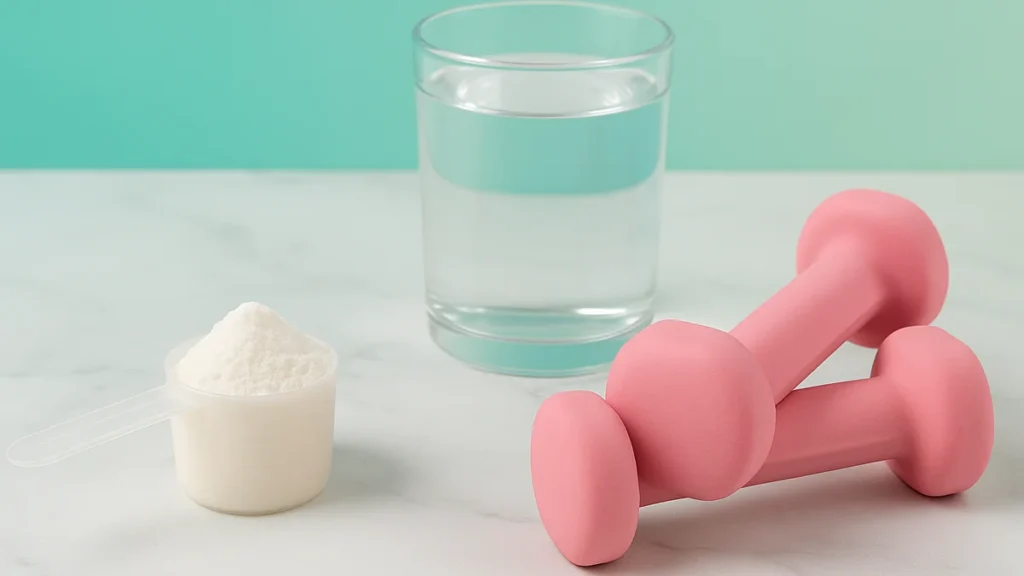
Creatine isn’t just for powerlifters and sprinters anymore. In 2025, it’s one of the most studied, affordable, and practical supplements for women who want better strength, body composition, energy for training, and possibly cognitive support—without messing with hormones or “bulking up.” This guide translates the newest research into a clear, step-by-step plan you can actually use, with honest answers on safety, hair loss, bloating, and whether you really need a loading phase. For healthy adults using standard doses, creatine monohydrate remains among the safest and most effective performance supplements available.
Table of Contents
What Exactly Is Creatine (and Why Women Should Care)
Creatine is a compound your body makes from amino acids (and you also get small amounts from foods like meat and fish). Stored mostly in muscle and a bit in the brain, creatine helps recycle ATP—the “quick energy” your cells use for short, intense efforts. Supplementation raises your intramuscular creatine stores, so you can do a little more high-quality work per set, recover faster between bouts, and adapt better over time. For many women—especially those on plant-forward diets, in perimenopause/postmenopause, or returning to training—those small performance gains add up to real-world results. Authoritative reviews continue to classify creatine monohydrate as effective for repeated high-intensity exercise and strength.
Key Benefits for Women (Backed by 2025 Science)
1) Stronger Lifts, Better Training Quality
The best-established effect of creatine is improved performance on repeated, short, intense efforts (e.g., sets of 5–12 reps, sprints, circuits). That typically translates to more total reps or slightly heavier loads—small differences that compound into better strength and muscle over weeks. Expert position statements still rate creatine as safe and effective when used as directed.
2) Lean Mass Support—Without “Bulky” Weight Gain
Creatine helps you train harder and recover a bit faster, which supports lean mass. The scale may bump 0.5–1.5 kg at first from increased muscle water (intracellular), not fat. This is not “puffiness”—it’s a normal, performance-enhancing part of higher creatine storage.
3) Cognitive & Mood Support (Emerging)
Research exploring creatine’s role in brain energy suggests potential benefits for tasks involving short-term memory and mental fatigue, with growing interest in women’s health across the lifespan (e.g., sleep, perimenopause). While more female-specific trials are needed, recent reviews point to promising avenues for cognition and quality of life.
4) Perimenopause & Postmenopause: Strength, Bone, and Function
As estrogen declines, women face greater risks of sarcopenia and reduced exercise capacity. Creatine—combined with resistance training—can support strength and functional outcomes. A 2025-focused perspective highlights a rationale for creatine across hormonal life stages, including perimenopause and postmenopause.
5) Recovery From Training
By improving ATP resynthesis, creatine can reduce perceived fatigue between sets and may aid recovery over a training week. This effect is subtle day-to-day but noticeable over months of consistent use.
Safety First: What We Know in 2025
- Kidneys & overall health: In healthy adults, standard doses (3–5 g/day) of creatine monohydrate are considered safe with extensive long-term data. If you have kidney disease or are on nephrotoxic medications, talk to your clinician before using creatine.
- Hair loss: The longstanding rumor that creatine causes hair loss is not supported by current evidence. Modern randomized work measuring hormones and follicle health found no direct link; earlier concerns stemmed from a small, older study that was never replicated.
- Dehydration & cramps: Data don’t support creatine causing dehydration or cramping when you hydrate normally; many athletes report the opposite—better training quality.
- Pregnancy & breastfeeding: Evidence is emerging but not yet definitive for routine use. Until we have robust clinical data, the prudent approach is to consult your OB-GYN and avoid starting new supplements during pregnancy/breastfeeding unless medically advised.
Dosage: Exactly How to Take Creatine (No Guesswork)
You have two proven options. Choose the one that fits your style:
Option A — No-Load, Steady Daily Dose
- Take 3–5 g creatine monohydrate once daily.
- You’ll saturate muscle stores in ~3–4 weeks and then stay there as long as you’re consistent.
- This is the simplest, gentlest approach for your stomach.
Option B — Classic Loading, Then Maintenance
- Load: ~20 g/day split into 4×5 g for 5–7 days.
- Maintain: 3–5 g/day thereafter.
Loading raises creatine stores faster (about a week). Both strategies work—pick the one you prefer.
Timing: Take it any time you’ll remember—consistency beats timing. Some prefer post-workout with a carb/protein meal to ease GI tolerance and potentially nudge uptake.
Hydration: Drink normally; there’s no need for extreme water intake. If you’re new to creatine, add an extra glass of water with your dose.
Cycling: Not required. Creatine works by staying topped up—don’t overthink it.
Which Form Is Best?
- Creatine Monohydrate is the gold standard—most studied, effective, and cost-efficient (sometimes labeled with well-known purity marks).
- “Advanced” forms (HCL, ethyl ester, nitrate) cost more without strong evidence they outperform monohydrate in real-world outcomes.
- Look for third-party testing (e.g., sports certification programs) to reduce contamination risk.
Does Creatine Make Women “Puffy” or “Bulky”?
Short answer: No. The initial scale change (typically 0.5–1.5 kg) is mostly intramuscular water—inside the muscle cell, supporting performance—not “subcutaneous bloat.” Clothing fit usually doesn’t change, and physique often looks firmer as training quality improves.
Tips if you’re weight-sensitive (e.g., weight-class sports):
- Choose Option A (no-load) to minimize rapid water shifts.
- Start 3 g/day and move to 5 g/day after 2–3 weeks if desired.
Women-Specific FAQs (Quick Hits)
- Will it affect my cycle? There’s no evidence that standard creatine dosing disrupts the menstrual cycle. Research is actively exploring creatine across women’s hormonal life stages; current reviews are encouraging but call for more trials.
- Vegan or low-meat diets? You likely start with lower muscle creatine stores; supplementation may feel more noticeable.
- Endurance athletes? Creatine mainly helps short, intense efforts and strength work, but mixed training plans can still benefit (e.g., hills, surges, gym sessions).
- Teen athletes? Always involve a parent/coach and physician; evidence is strongest in adults.
How to Start Creatine in 7 Steps (Women’s Checklist)
- Confirm you’re a good candidate. Healthy adult, training 2–4×/week, aiming for strength, muscle, or high-intensity performance. If you have kidney disease, are pregnant/breastfeeding, or take prescription meds, get medical input first.
- Buy the right product. Creatine monohydrate, unflavored, third-party tested.
- Pick your plan.
- No-load: 3–5 g daily (easiest).
- Load: 20 g/day for 5–7 days, then 3–5 g/day.
- Take it with a meal to reduce GI upset (carb + protein works well).
- Lift smart. 2–4 total-body strength sessions/week. Creatine amplifies good programming, not random workouts.
- Track one metric. Examples: 5-rep squat, push-ups, pull-ups, 500-m row, or your long-run hill splits.
- Evaluate at week 4 and week 12. Look for more reps at the same RPE, slightly higher loads, or better session quality.
Training & Nutrition Pairings That Work
- Strength template:
- Lower body (squat or hinge focus)
- Upper push (bench/push-ups)
- Upper pull (rows/pull-ups)
- Accessory core & glutes
Keep 2–3 hard sets (RPE 7–9) per exercise.
- Protein target: 1.6–2.2 g/kg/day spread across 3–4 meals.
- Carbs on training days: Support performance and recovery (don’t fear carbs—creatine shines when you can train hard).
- Hydration: Normal day-to-day intake; add a glass of water with your dose.
Side Effects & Fixes
- Mild stomach upset? Split your dose (e.g., 2–3 g morning + 2–3 g post-workout) and take with food.
- Scale up too fast? Use the no-load plan.
- Caffeine? You can keep your coffee. Old concerns about “creatine + caffeine” are inconsistent; many athletes use both without issue.
- Lab work? Serum creatinine (a lab marker) can rise slightly due to creatine itself, not kidney damage. If your clinician monitors you, let them know you supplement.
Myth-Busting (The 2025 Edition)
Myth #1: Creatine causes hair loss.
Current evidence does not support this claim. Modern randomized work has found no direct link between creatine use and hair loss. The often-cited 2009 study was small, never replicated, and didn’t measure hair outcomes.
Myth #2: Creatine is a “men’s” supplement.
Creatine is a human supplement. Reviews centered on women highlight potential benefits throughout female life stages, including perimenopause and beyond.
Myth #3: Creatine ruins kidneys.
In healthy adults using standard doses, major organizations consider creatine safe. People with kidney disease should consult a clinician.
Myth #4: You must load or it won’t work.
Loading is optional. Daily 3–5 g still saturates muscles—just more gradually.
Myth #5: Fancy forms beat monohydrate.
There’s no strong evidence that pricier forms outperform monohydrate for the goals most women care about.
Sample 12-Week Progression (Creatine + Training)
Weeks 1–2
- Dose: 3 g/day (no-load)
- Goal: Get consistent; learn movement patterns; track one lift and one conditioning metric.
Weeks 3–6
- Dose: 3–5 g/day
- Training: Add 2.5–5 kg to main lifts if reps feel easier; increase weekly volume slightly.
- Expectation: Session quality improves; recovery between sets feels better.
Weeks 7–12
- Dose: 3–5 g/day
- Training: Add a heavy top set (RPE 8–9) plus back-off sets.
- Expectation: Measurable strength uptick; more reps or higher loads at the same RPE.
Who Should Consider Creatine Right Now?
- Women returning to strength training after a break.
- Perimenopausal/postmenopausal women targeting strength and function.
- Plant-based eaters with lower baseline creatine intake.
- Athletes with repeated high-intensity efforts (CrossFit®, HIIT, team sports, sprints).
- Busy professionals/students who want a simple, low-cost aid to make the most of short training windows.
When to Press Pause or Seek Medical Advice
- You have kidney disease, are taking nephrotoxic medications, or have been advised to restrict protein/creatine—see your clinician first.
- You’re pregnant or breastfeeding—do not start new supplements without OB-GYN guidance; evidence is emerging but not definitive for routine use.
- You experience persistent GI distress—reduce dose, split intake, or try a different brand (third-party tested).
Buying Guide: What to Look For
- Type: Creatine monohydrate powder.
- Purity: Short ingredient list (just “creatine monohydrate”).
- Testing: Prefer brands with independent sports-certification testing.
- Price: Creatine is inexpensive; avoid “proprietary blends.”
- Serving: 3–5 g per scoop (verify with a kitchen scale if you want to be precise).
FAQ
1) Does creatine cause hair loss in women?
No high-quality evidence shows that creatine causes hair loss. If you’re predisposed to androgenic hair loss and still worry, choose the no-load plan and monitor over 8–12 weeks.
2) What’s the best creatine dose for women?
Most women do well with 3–5 g/day of creatine monohydrate. Loading (20 g/day for 5–7 days) is optional and just saturates faster. Consistency matters more than timing.
3) Is creatine safe for long-term use?
In healthy adults following standard doses, expert bodies consider creatine safe. If you have kidney disease or are pregnant/breastfeeding, get medical advice first.
4) Will creatine make me bloated or “bulky”?
Early scale changes are mostly intramuscular water, not fat. Most women notice improved training quality and a firmer look over time.
5) Do women over 40 benefit from creatine?
Yes—especially when paired with strength training. Evidence focused on women suggests creatine may support strength and functional outcomes during peri- and postmenopause.
The Bottom Line
If you’re a healthy adult woman who trains, creatine monohydrate is a low-cost, high-benefit supplement with excellent safety data at standard doses. Start with 3–5 g/day, stay consistent for 4–12 weeks, and pair it with sensible strength programming, adequate protein, and normal hydration. Use third-party tested products, and loop in your clinician if you have medical conditions, are pregnant, or breastfeeding. In 2025, the science is clearer than ever: creatine isn’t a “men’s supplement”—it’s a practical tool for women who want stronger, more capable bodies and better training sessions.
Content is for informational purposes only and does not substitute professional medical advice. Always consult a qualified healthcare professional regarding supplements, medications, and lab results.
Health & Personal Care