
Car Engine Problems in 2025: Symptoms, Causes & Fixes (Ultimate Guide)
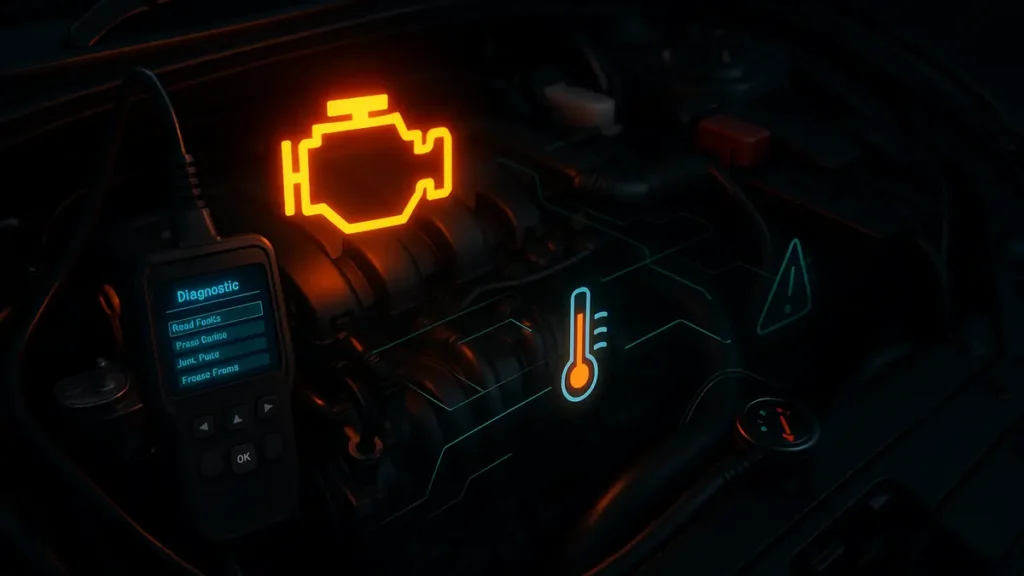
Modern engines are smarter and more efficient than ever, but they still fail in familiar ways. If you’re seeing a check engine light, hearing a ticking or knocking noise, noticing rough idle, or battling engine overheating, this guide walks you through what’s happening, why it happens, and how to fix it—step by step and in plain English.
Quick takeaway: most car engine problems trace back to air, fuel, spark, compression, coolant, or sensors. Learn to test each system in a safe, logical order before replacing parts.
Table of Contents
How an Engine Works (60-second refresher)
A typical gasoline engine needs air + fuel + spark + compression at the right time. The ECU (engine computer) uses dozens of sensors—MAF, MAP, O2, coolant temp, cam/crank—to calculate fuel and spark precisely. If one piece drifts out of spec, you’ll feel it: rough idle, misfire, stalling, power loss, or a check engine light.
Key systems to remember:
- Air: intake, air filter, throttle body, intake manifold, vacuum lines.
- Fuel: pump, filter (if serviceable), rail, injectors.
- Spark: plugs, coils, wiring.
- Compression/Timing: valves, rings, head gasket, timing belt/chain.
- Cooling: radiator, thermostat, water pump, fans, coolant.
- Exhaust/Aftertreatment: catalytic converter, O2 sensors.
Smart Diagnostic Flow (What to Check First)
Before replacing parts, follow this fast, low-cost checklist:
- Scan for codes. Use an OBD2 scanner to read P-codes (e.g., P0300 random misfire, P0171 system too lean, P0420 catalyst efficiency).
- Visual inspection. Look for loose clamps, cracked vacuum hoses, oil or coolant leaks, chafed wiring, corroded grounds.
- Fluids & basics. Check oil level, coolant level, and air filter condition.
- Battery & grounds. Weak voltage causes random gremlins. Clean terminals; load-test the battery.
- Live data sanity check. With engine warm, confirm sensible readings: coolant temp ~90°C/195°F; short-term fuel trim near 0%; stable idle RPM.
- Symptom-guided testing. Target the system your codes and symptoms point to (spark, fuel, air, compression).
Pro tip: Fix the root cause that triggered the code; then clear codes and drive a full cycle so monitors reset correctly.
Check Engine Light & OBD2 Basics (P-codes demystified)
- Solid CEL: non-urgent fault; diagnose soon.
- Flashing CEL: active misfire that can damage the catalytic converter—reduce load and stop driving hard.
Common codes to know:
- P0300–P030X: misfire (random or specific cylinder).
- P0171/P0174: system too lean (vacuum leak, MAF, fuel delivery).
- P0420: catalyst efficiency below threshold (misfire/fuel issues often upstream cause).
- P0117/P0128: coolant temp sensor or thermostat performance.
- P044X: EVAP leaks—can cause rough starts or CEL after refueling.
Overheating: Causes, Fixes & Hot-Climate Tips
Symptoms: temp gauge climbing, coolant boiling, heat weak at idle, warning light, sweet smell, overflow tank bubbling.
Likely causes:
- Low coolant (leak at hoses, radiator, water pump, heater core)
- Stuck thermostat (closed)
- Failed radiator fan (bad relay, fuse, motor)
- Clogged radiator or restricted airflow (debris)
- Water pump impeller wear/leak
- Head gasket failure (combustion gases in coolant)
DIY checks (engine cold):
- Squeeze upper radiator hose—feel for coolant, not air.
- Top off with the correct coolant type; bleed air per service manual.
- Verify fans switch on with AC or at temp.
- Inspect the thermostat and radiator cap condition.
Hot-climate tips (e.g., desert driving):
- Keep the coolant mix correct; don’t run straight water.
- Wash bugs/debris from radiator and AC condenser fins.
- Avoid long idles with AC at max; use recirculate mode for efficiency.
- Replace aging hoses and thermostat proactively if you tow or drive in extreme heat.
If you see white smoke, milky oil, or continuous bubbling in the expansion tank, test for a blown head gasket before further driving.
Misfires, Rough Idle & Power Loss
Feel: shaking at idle, stumbling on acceleration, poor fuel economy, CEL.
Top culprits:
- Spark plugs worn or wrong gap
- Ignition coils failing under heat/load
- Vacuum leaks at hoses/intake gasket
- MAF contamination, throttle body carbon
- Fuel injectors clogged/uneven
- Low compression (valves, rings, head gasket)
Fast fixes:
- Replace spark plugs on schedule (iridium often 60k–100k mi; check manual).
- Swap suspected coil with another cylinder—does the misfire move?
- Clean throttle body and MAF with the correct cleaners.
- Run a fuel system cleaner or professional injector service if GDI buildup is suspected.
- Perform a compression or leak-down test if misfire persists.
Engine Noises: Ticking, Knocking, Whine, Rattle
- Ticking at idle: often injectors (normal), but can be valvetrain—low oil, wrong viscosity, or worn lifters.
- Knock under load: detonation (low octane, carbon buildup, overheated intake air) or a rod knock (serious).
- Whine rising with RPM: accessory bearings, alternator, or turbo spool.
- Rattle on cold start: timing chain tensioner/guide wear (address early).
What to do: Verify oil level/grade, use the recommended octane, consider intake valve cleaning on GDI engines, and investigate timing chain noises promptly to avoid catastrophic failure.
Exhaust Smoke Colors: White, Blue, Black
- White (persistent, sweet smell): coolant burning—head gasket or cracked head.
- Blue: oil burning (valve seals, rings, turbo seal).
- Black: running rich (leaking injector, failed sensor, clogged air filter).
Quick checks: Inspect plugs (wet/oily/sooty), monitor oil/coolant consumption, and scan fuel trims: large negative trims suggest rich; large positive trims suggest lean/vacuum leak.
Oil Pressure, Leaks & Maintenance Intervals
Low oil pressure light at idle can mean thin oil (wrong grade), clogged pickup, worn bearings, or a faulty sensor. Don’t ignore it—verify actual pressure with a mechanical gauge.
Common oil leaks:
- Valve cover gasket
- Oil filter housing and cooler seals
- Front/rear main seals
- Oil pan gasket
Intervals (always confirm owner’s manual):
- Oil & filter: synthetic commonly 5,000–10,000 km (3k–6k mi) depending on duty cycle/heat.
- Engine air filter: inspect every service; replace when loaded.
- PCV valve: 50–100k km if serviceable.
- Coolant: 3–5 years typical for OAT/HOAT.
- Spark plugs: iridium 60–160k km depending on engine.
In hot climates or lots of city idling/start-stop, shorten intervals for oil and filters.
Air & Fuel: Filters, Injectors, MAF, O2, Throttle
- Air filter: a clogged filter restricts airflow → rich running and poor power. Replace earlier in dusty regions.
- MAF sensor: dirt skews readings → P0171 lean, hesitation. Clean with MAF cleaner only (never touch hot wire).
- Throttle body: carbon causes sticking/rough idle. Clean and recalibrate if required.
- O2 sensors: aging sensors slow down feedback, harming economy and emissions. If P0420, verify misfires or rich/lean issues first.
- Fuel injectors: GDI tips can coke up—consider professional cleaning or walnut blasting of intake valves where applicable.
Timing Belt vs. Chain: Intervals & Symptoms
- Belts: fixed replacement interval (e.g., 90–160k km). Failure on interference engines can bend valves. Replace water pump and tensioners with the belt.
- Chains: “lifetime” in theory, but many stretch or tensioners wear—listen for cold-start rattle or cam/crank correlation codes.
Warning signs: rough cold starts, poor performance, rattle, cam/crank sensor codes, and metal in the oil.
Turbo, GDI & Carbon Build-Up (2025 realities)
Turbocharged and GDI engines are common in 2025 for efficiency. They deliver strong torque but can suffer from:
- Boost leaks (split hoses, loose clamps) → hiss, low power, rich smoke.
- Wastegate issues → over/under-boost, surge, limp mode.
- Oil coking in turbo bearings if oil changes are neglected.
- Intake valve carbon on GDI (because fuel no longer washes valves).
Best practices:
- High-quality synthetic oil at proper intervals—crucial for turbo health.
- Periodic intake cleaning (e.g., walnut blast) for GDI at higher mileage.
- Use the recommended octane to avoid knock in boosted engines.
Hybrids, Start-Stop & Light-Duty Use
Hybrids still have internal combustion engines (ICE) that need normal service. Start-stop systems save fuel but can stress batteries/starters. Short trips can cause fuel dilution of oil and incomplete PCV evaporation.
Tips:
- Don’t extend oil intervals just because it’s a hybrid.
- Ensure the 12V battery and grounds are solid to prevent random CEL events.
- Occasionally take longer highway drives to fully warm fluids and burn off moisture.
Preventive Maintenance Checklist (Owner-friendly)
- Scan for codes at every service; log them.
- Replace engine oil & filter on time (shorten in heat/stop-go).
- Inspect coolant and hoses; test radiator cap; verify fan operation.
- Keep air filter, throttle body, and MAF clean.
- Use quality fuel; consider cleaner if misfire/rough idle emerges.
- Follow spark plug and belt/chain service schedules.
- Watch for leaks early (oil/coolant).
- Keep the battery healthy; clean grounds.
- For turbo/GDI: be strict with oil changes; plan intake cleaning at higher mileage.
Symptom-to-Fix Quick Reference
Engine overheating
- Check coolant level/leaks → pressure test system
- Test thermostat; verify radiator fan(s)
- Inspect radiator (external debris, internal clogging)
- Consider head gasket test if symptoms persist
Rough idle / engine stalling at stop
- Clean throttle body & IAC passage (if equipped)
- Check vacuum leaks (smoke test if possible)
- Inspect plugs/coils; check fuel trims and MAF data
Engine misfire (P0300/P030X)
- Replace plugs; swap coils for A/B test
- Compression/leak-down if mechanical issue suspected
- Injector test/cleaning on GDI engines
Low oil pressure light
- Verify oil level/grade; replace oil & filter
- Check with mechanical gauge; inspect pickup screen
- Diagnose bearing wear if pressure remains low
White/blue/black smoke
- White (coolant): test for head gasket
- Blue (oil): valve seals, rings, turbo seal
- Black (rich): injector stuck, MAF/O2 issue, clogged air filter
Timing rattle on cold start
- Replace tensioner/guides; inspect chain stretch
- Change oil and verify correct spec; low oil can worsen rattle
FAQs
1) Why is my check engine light flashing?
A flashing CEL means an active misfire that can overheat and damage the catalytic converter. Reduce load immediately and diagnose coils, plugs, injectors, and compression. Clear codes only after a confirmed fix.
2) Why does my engine overheat only in traffic?
Weak radiator fans, a clogged radiator, or a stuck thermostat reduce cooling at low speeds. Verify fan activation, coolant level, and cap condition; pressure-test the system.
3) My car shakes at idle but drives fine—what now?
Check for vacuum leaks, dirty throttle body, or a marginal coil. Scan fuel trims (+ trims point to lean/vacuum issues). Clean throttle/MAF and inspect plugs.
4) Is engine flush safe for high-mileage engines?
It depends on condition and manufacturer guidance. A flush can loosen deposits, but if seals are brittle, leaks may appear. Many owners prefer short-interval oil changes with high-detergent oil instead.
5) Do fuel injector cleaners actually work?
Light deposits can improve with quality cleaners. For GDI with heavy carbon, professional cleaning or walnut blasting of intake valves is often required.
6) What’s the difference between timing belt and chain?
Belts have fixed replacement intervals; chains can last longer but still wear. Cold-start rattle or cam/crank correlation codes suggest chain/tensioner issues.
7) Which oil is best: 0W-20 vs 5W-30?
Use the grade specified for your engine. Hot climates or heavy loads may justify a higher hot-viscosity within manufacturer allowances. The wrong grade can affect pressure and wear.
8) Why does my engine knock when accelerating?
Possible low octane, excessive intake temps, carbon buildup, or faulty knock sensor. Verify fuel quality, clean the intake, and ensure the cooling system is healthy.
9) Coolant keeps disappearing but I see no leak—why?
Small leaks can evaporate on hot surfaces, or coolant may be entering the combustion chamber (head gasket). Pressure-test when cold and check for hydrocarbons in coolant.
10) When should I replace spark plugs?
Follow the manual (often 60k–160k km for iridium). Misfires under load or poor economy can hint the interval has been exceeded.

2 Comments