
Acid Reflux at Night: Causes, Pillows, Meals, and a 7-Day Relief Plan
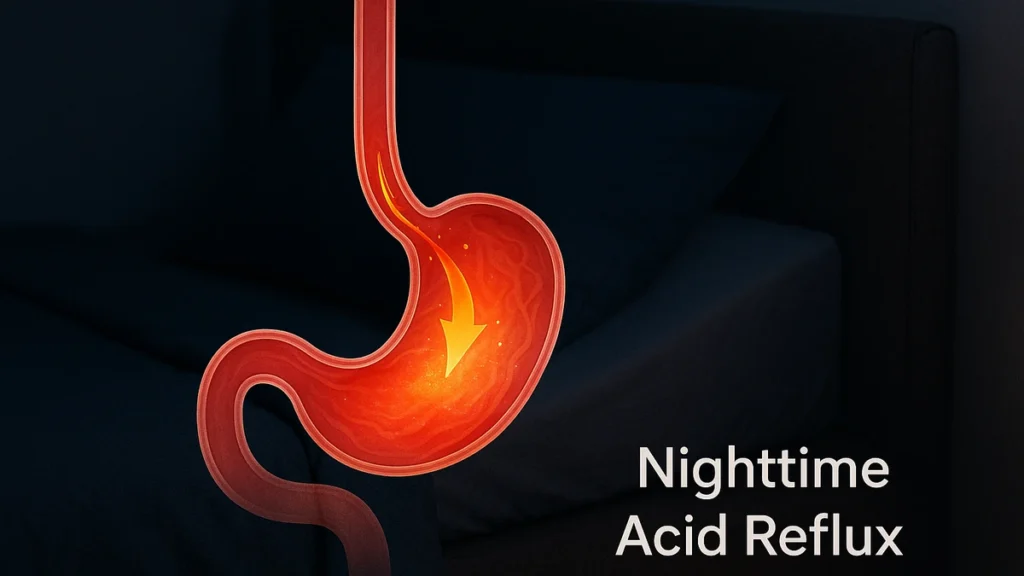
Summary: Nighttime reflux is common because lying down reduces gravity’s help and slows acid clearance. Simple changes—head-of-bed elevation, left-side sleeping, earlier/lighter dinners, and smart OTC use—often deliver quick relief. This guide explains why reflux worsens at night, the best pillow/position setup, meal timing and foods to trial, plus a 7-day plan and when to see a clinician. (Educational only—talk to your clinician for personal care.)
Table of Contents
Why Nighttime Reflux Feels Worse
- Gravity loss: When you lie flat, stomach contents can flow back more easily into the esophagus; acid also clears more slowly. Head-of-bed elevation reduces nocturnal esophageal acid exposure and improves symptoms in trials and systematic reviews. giboardreview.com+2بيانات المكتبة العامة+2
- Body position matters: Left-side sleeping tends to reduce nocturnal reflux vs. the right side, which can increase it (the gastric outlet and EGJ become more “dependent” on the right). Evidence includes RCTs and reviews. giboardreview.com+2cghjournal.org+2
- Late, heavy meals: Eating close to bedtime increases the likelihood of nighttime heartburn; many guidelines advise finishing dinner 3–4 hours before lying down. nice.org.uk+1
Pillows & Positions That Actually Help
1) Elevate the head and torso (not just the head)
Use a foam wedge or raise the bed 6–8 inches (15–20 cm) to create a gentle incline from hips to shoulders. Compared with flat sleeping, head-of-bed elevation and wedge pillows reduce nocturnal acid exposure and symptoms. niddk.nih.gov+2بيانات المكتبة العامة+2
2) Sleep on your left side
Left-lateral decubitus (LLD) position is associated with less esophageal acid exposure and improved symptoms compared with right-side sleeping. Try training yourself using a body pillow behind your back. giboardreview.com+2Wiley Online Library+2
3) Avoid propping only the neck
Two or three pillows under just the head can kink the neck and compress the abdomen. Aim for torso elevation with a wedge or risers under the bed legs. American Gastroenterological Association
Meals, Timing & Smart “Triggers” Testing
Eat earlier, lighter dinners
Finish your main meal 3–4 hours before bed; avoid lying down after meals. If needed, keep a small, bland snack (e.g., yogurt, banana) ≥2 hours before bedtime. nice.org.uk+1
Portion size & composition
Large, high-fat meals delay gastric emptying and can aggravate reflux. Try smaller portions and consider lower-fat options at dinner.
Identify personal triggers (not universal for everyone)
Common culprits include mint, chocolate, alcohol, coffee, very spicy or acidic foods. Test systematically with a 2-week food/symptom log—cut one category at a time to confirm a true trigger. Guidance emphasizes tailoring diet to the individual. American Gastroenterological Association
Daytime Habits That Pay Off at Night
- Weight management (if needed): Losing excess weight reduces intra-abdominal pressure and reflux burden. American Gastroenterological Association
- Avoid tight waistbands and heavy belts in the evening. American College of Gastroenterology
- Caffeine/alcohol timing: Trial an afternoon caffeine cutoff and limit alcohol with dinner.
- Smoking: Stopping smoking helps LES function and overall reflux control. niddk.nih.gov
OTC Medications (Use Wisely)
- Antacids (on-demand): Fast, short relief for episodic heartburn.
- H2 blockers (e.g., famotidine): Helpful for nighttime symptoms; take ~30–60 minutes before bed when needed.
- PPIs (e.g., omeprazole): For frequent symptoms, typically before breakfast; some people need a short course or clinician-guided regimen. Lifestyle measures remain foundational. Follow guideline advice and discuss with a clinician if using beyond a brief trial. American Gastroenterological Association+1
Red flags—see a clinician promptly: trouble swallowing, unintentional weight loss, vomiting, bleeding/black stools, chest pain, or symptoms starting after age 55. nice.org.uk
7-Day Nighttime Reflux Relief Plan
Goal: stack evidence-based habits for quick relief while you discover your personal triggers.
Every day this week
- Dinner by T-4h (finish ≥3–4 hours before bedtime). nice.org.uk
- Bed setup: wedge or 15–20 cm risers under head-end; sleep left-side. niddk.nih.gov+1
- No lying down for 2–3 hours after meals; short walk helps gastric emptying. Cambridge University Hospitals
- Evening drink: water or herbal tea (non-mint); avoid large volumes at once.
- Clothing: loose waist in the evening. American College of Gastroenterology
- OTC plan (if needed): Start with antacids on demand; if nightly symptoms persist, discuss H2 or PPI with a clinician. American Gastroenterological Association
Day-by-day add-ons
- Day 1: Install wedge/risers; practice left-side position with a body pillow.
- Day 2: Trigger audit—remove late coffee, alcohol with dinner.
- Day 3: Reduce dinner fat load; split large meals earlier in the day.
- Day 4: Start a 2-week food + symptom log; note exact times relative to bedtime.
- Day 5: Check belt/waist fit; switch to looser evening wear. American College of Gastroenterology
- Day 6: If still symptomatic, trial famotidine at night (ask your clinician/pharmacist). American Gastroenterological Association
- Day 7: Review your log; keep the 3–5 habits that helped most; plan week 2 with targeted trigger trials.
Quick Reference Table
| Problem at Night | Likely Driver | Tonight’s Fix | Ongoing Habit |
|---|---|---|---|
| Heartburn when lying down | Flat posture | Wedge/bed risers; left-side | Keep head-end 6–8 in higher niddk.nih.gov |
| Heartburn after late dinner | Meal timing | No food in last 3–4 h | Earlier, lighter dinners nice.org.uk |
| Reflux despite small dinner | Position | Left-side sleeping | Train with body pillow giboardreview.com |
| Wakes at 2–3 a.m. burning | Triggers or alcohol | Water, upright posture | Trigger log; limit alcohol |
| Frequent nightly symptoms | Acid secretion | Ask about H2/short PPI trial | Review need with clinician American Gastroenterological Association |
FAQs
Q1) Which is better: wedge pillow or extra pillows?
A wedge or head-of-bed elevation is superior because it raises the torso, not just the neck—reducing nocturnal acid exposure more reliably than stacking pillows. بيانات المكتبة العامة
Q2) Does left-side sleeping really help?
Yes. Multiple studies and guideline summaries associate left-side sleeping with less esophageal acid exposure vs right-side. Try it nightly for two weeks. giboardreview.com+1
Q3) How long after dinner should I wait before bed?
Most guidance recommends finishing the main meal 3–4 hours before bedtime. nice.org.uk
Q4) Are “reflux trigger foods” the same for everyone?
No. Triggers vary—use a food/symptom log and remove items methodically (mint, chocolate, alcohol, coffee, very spicy/acidic foods) to confirm. American Gastroenterological Association
Q5) When should I seek medical advice?
If symptoms persist despite lifestyle changes/OTC use, or if you notice alarm features (swallowing trouble, weight loss, bleeding, chest pain), see a clinician. nice.org.uk
Sources (high-quality/official)
- ACG Clinical Guideline (2022): Evidence for head-of-bed elevation and left-side sleeping; right-side increases reflux vs left. giboardreview.com
- NIDDK (NIH): Adult GERD treatment—weight loss, head-of-bed elevation (6–8 in), smoking cessation, dietary adjustments. niddk.nih.gov
- AGA Clinical Guidance: Weight loss; elevate head of bed; avoid late meals; tailor diet to individual triggers. American Gastroenterological Association
- NICE Guidance: Lifestyle advice includes raising head of bed and main meal ≥3 hours before bed. nice.org.uk
- Positional Therapy Evidence: Left-side sleeping reduces nocturnal acid exposure. cghjournal.org+1
- Systematic Review: Head-of-bed elevation improves GORD symptoms.




One Comment