
Turkey (Türkiye) Travel Guide 2025: Itineraries, Costs, and Must-See Places
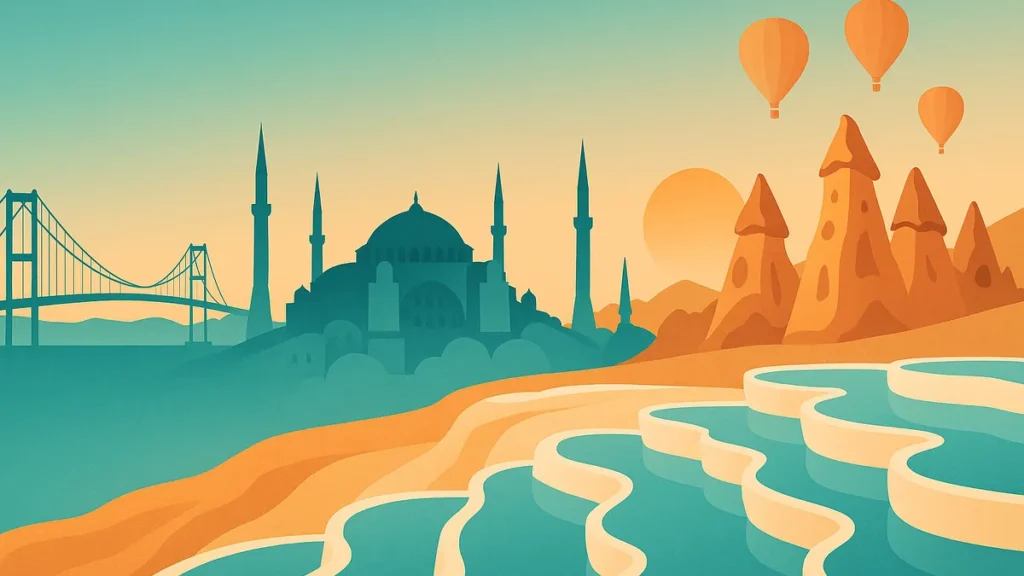
Table of Contents
Turkey (Türkiye) hits the sweet spot for 2025 travelers: world-class heritage in Istanbul, sunrise balloons in Cappadocia, turquoise beaches on the Turkish Riviera, and exceptional food everywhere in between. This guide distills what you need—best time to visit, visa basics, how to move around, sample itineraries (7/10/14 days), and the can’t-miss experiences from Hagia Sophia to Oludeniz paragliding—so you can plan with confidence and enjoy the trip of a lifetime.
At a glance (save for later):
- Top Destinations: Istanbul, Cappadocia, Antalya, Bodrum, Fethiye/Oludeniz, Pamukkale, Ephesus, Izmir, Kas/Kalkan, Trabzon & Uzungöl, Mardin & Gaziantep.
- Signature Experiences: Bosphorus sunset cruise, hot-air balloons, Turkish hammam, Lycian Way hike, gulet boat day, Pamukkale thermal pools, Ephesus day trip.
- Trip Lengths: 7 days (Istanbul + Cappadocia), 10 days (add Antalya coast), 14 days (add Aegean/Black Sea).
Why Visit Turkey in 2025
- Easy access & variety: One visa unlocks Roman ruins, Ottoman palaces, lunar-like valleys, and Mediterranean coves—often within short flights.
- Year-round options: Summers for beaches (Antalya, Bodrum), spring/fall for city walks and hikes, winter for quieter Cappadocia and ski options like Uludağ.
- Great value: From boutique cave hotels to all-inclusive seaside resorts, Turkey offers strong price-to-quality across budgets.
- Food capital: Kebab is just the entry point—expect meze spreads, baklava, Turkish breakfast feasts, seafood by the Bosphorus, and Gaziantep’s legendary cuisine.
Best Time to Visit Turkey
Spring (April–June): Pleasant temperatures for Istanbul’s Old City, Cappadocia hikes, and Aegean ruins before peak crowds.
Summer (July–August): Beach time on the Turkish Riviera (Antalya, Fethiye, Bodrum). Inland destinations can be hot; book early and time sightseeing for mornings/evenings.
Autumn (September–October): Arguably the best all-round window for cities, Cappadocia, and coastal trips with warm seas and thinner crowds.
Winter (November–March): Quiet, atmospheric Istanbul and Cappadocia (possible snow), lower prices, and festive vibes. Balloons often fly year-round but depend on weather.
Pro tip: If your priority is Cappadocia hot-air balloons, plan two mornings to hedge against weather cancellations.
Visa & Entry Basics
Many nationalities can apply for an e-Visa online or enter visa-free; rules vary by passport. Your passport should have blank pages and sufficient validity. Always confirm requirements on your government site and Turkey’s official e-Visa portal before booking. Keep a digital and printed copy of your visa/insurance.
Airports: Most international flights land at Istanbul Airport (IST); some arrive at Sabiha Gökçen (SAW) on the Asian side. Antalya, Izmir, Bodrum, and Kayseri/Nevşehir (for Cappadocia) handle domestic and seasonal international traffic.
Money, SIM & Connectivity
- Currency: Turkish Lira (TRY). Card acceptance is widespread in cities; carry cash for small vendors, dolmuş (minibuses), and rural areas.
- ATMs & exchange: ATMs are plentiful; compare fees. Avoid dynamic currency conversion—pay in TRY.
- SIM/eSIM: Buy a local SIM/eSIM at the airport or major malls for affordable data.
- Tipping: 5–10% in restaurants (round up for small checks), a few lira for porters and hammam attendants.
Getting Around Turkey
- Flights: Domestic flights connect Istanbul with Antalya, Izmir, Bodrum, Kayseri, and more—useful for longer jumps.
- High-speed trains (YHT): Link Istanbul–Ankara and other corridors; reserve ahead.
- Buses: Comfortable intercity coaches link almost everywhere; night buses save hotel nights.
- Car rental: Great for the Aegean & Mediterranean coasts (Fethiye–Kas–Kalkan–Patara–Antalya). Roads are generally good; keep your license and insurance handy.
- Urban transport (Istanbul): Use Istanbulkart on metro, trams, buses, and ferries. Airport shuttles (Havaist) connect IST with central hubs.
- Taxis & ride-hailing: Licensed taxis are plentiful; insist on the meter. Rideshare/ride-hailing availability varies—check your app on arrival.
Top Places & What to Do
Istanbul: Two Continents in One City
Don’t miss:
- Sultanahmet (Old City): Hagia Sophia, Blue Mosque, Topkapi Palace, and the Basilica Cistern. Dress modestly for mosques (shoulders/knees covered; women may need a headscarf).
- Bosphorus: Sunset cruise past palaces and bridges, or a ferry ride to the Asian side (Kadıköy, Üsküdar).
- Bazaars: Grand Bazaar for carpets, lamps, ceramics; Spice Bazaar for tea and lokum (Turkish delight).
- Neighborhoods: Galata (tower views), Karaköy (cafés), Balat/Fener (colorful streets), Nişantaşı (boutiques).
- Food: Turkish breakfast, meze dinners, seafood by the water, and a proper hammam session.
Photo spots: Galata Bridge at dusk, Ortaköy Mosque with the bridge, rooftops around Sultanahmet (where allowed).
Cappadocia: Balloons, Valleys & Cave Hotels
Base yourself in Göreme, Uçhisar, or Ürgüp.
- Hot-air balloons: Iconic sunrise flights (weather-dependent). Book early; choose reputable operators.
- Valleys: Love, Rose, Red valleys for hikes and sunsets; Pigeon Valley between Göreme and Uçhisar.
- Sites: Göreme Open-Air Museum, Uçhisar Castle, Derinkuyu or Kaymaklı underground cities.
- Stay: Cave hotels (from cozy to luxury) are part of the magic—reserve well ahead in peak months.
Turkish Riviera: Antalya, Fethiye, Bodrum & Beyond
- Antalya: Base for Lara or Konyaaltı beaches, Kaleiçi old town, waterfalls, and family-friendly all-inclusive resorts.
- Fethiye & Ölüdeniz: The famed Blue Lagoon, paragliding in Ölüdeniz, boat trips to Butterfly Valley/Kekova (Sunken City), and seaside promenades.
- Kas & Kalkan: Quieter, boutique-hotel charm; scuba diving, sea-view terraces, and Patara Beach.
- Bodrum: Beach clubs, nightlife, upscale hotels, and day trips on gulet boats.
Pamukkale, Ephesus & the Aegean
- Pamukkale: White travertine terraces and the ancient city of Hierapolis (pack a swimsuit for thermal pools).
- Ephesus (near Selçuk): One of the best-preserved ancient cities; combine with Şirince village and Kuşadası.
- Izmir: Laid-back coastal city with café culture and access to Çeşme/Alaçatı.
Black Sea, Southeast & Off-the-Beaten Path
- Trabzon & Uzungöl: Alpine feel, tea plantations, lakeside walks.
- Rize & Ayder: Lush valleys and mountain plateaus for cool summer escapes.
- Gaziantep: A pilgrimage for baklava and regional cuisine.
- Mardin & Şanlıurfa: Mesopotamian landscapes, stone architecture, and deep history.
- Mount Nemrut, Van Lake, Kars: Rewarding for repeat visitors seeking Turkey’s wilder edges.
Sample Itineraries (Copy & Adapt)
7 Days: Istanbul + Cappadocia
- Day 1: Arrive IST → Sultanahmet walk (Hagia Sophia exterior views, Blue Mosque), early night.
- Day 2: Topkapi Palace → Basilica Cistern → sunset Bosphorus cruise.
- Day 3: Galata Tower → Karaköy cafés → Grand Bazaar & Spice Bazaar. Night bus/flight to Cappadocia.
- Day 4: Cappadocia sunrise balloons (weather-permitting) → Göreme Open-Air Museum → Love Valley hike.
- Day 5: Underground city (Derinkuyu/Kaymaklı) → Uçhisar Castle sunset.
- Day 6: Rose/Red Valley sunrise walk → optional ATV/horseback tour → fly back to Istanbul.
- Day 7: Brunch in Kadıköy → last-minute shopping → depart.
10 Days: Add Antalya (Turkish Riviera)
Follow the 7-day plan, then:
- Day 8: Fly to Antalya → Kaleiçi old town.
- Day 9: Beach day (Konyaaltı/Lara) or waterfalls; optional Land of Legends theme park.
- Day 10: Day trip (Termessos/Perge/Aspendos) → depart.
14 Days: Add Aegean or Black Sea
Add to the 10-day flow:
- Days 11–12 (Aegean option): Train/flight to Izmir → Ephesus + Şirince → Pamukkale day trip.
- Days 13–14: Bodrum or Fethiye for gulet or lagoon day, then depart.
OR - Days 11–12 (Black Sea option): Flight to Trabzon → Uzungöl & tea fields.
- Days 13–14: Rize highlands → return via IST.
Where to Stay (By Style & Intent)
- Istanbul:
- Sultanahmet for first-timers near the big sights.
- Beyoğlu (Taksim/Galata/Karaköy) for nightlife, cafés, and shopping.
- Kadıköy on the Asian side for local vibes and budget value.
- Cappadocia: Cave hotels are the experience; book early for rooms with terraces and balloon views.
- Antalya & Belek: All-inclusive resorts for families; boutique options in Kaleiçi.
- Bodrum/Kalkan/Kas: Chic boutique hotels and sea-view villas.
- Fethiye/Ölüdeniz: Lagoon-side resorts and paragliding-friendly bases.
Costs & Budget Planning (Approximate)
Prices vary by season and currency swings; these rough ranges help with planning.
- Daily budgets (per person):
- Backpacker: $50–$90 (hostel/guesthouse, public transport, street food).
- Mid-range: $90–$180 (3–4★ hotel, a few tours, mix of taxis/metro).
- Comfort/Luxury: $200+ (5★ hotels/cave suites, private tours, fine dining).
- Balloon rides: Premium experience; expect dynamic pricing. Reserve early in peak months.
- Bosphorus cruise/hammam: Wide range; check reviews and what’s included (scrub/massage, transfers, dinner).
Food & Halal Travel
- Breakfast (“kahvaltı”): Honey, cheeses, olives, tomatoes, simit, menemen (eggs with tomatoes/peppers).
- Meze & grills: Adana/Urfa kebab, çiğ köfte (modern versions are vegetarian), lahmacun, pide.
- Sweets & drinks: Baklava, künefe, sütlaç, Turkish delight; Turkish tea and coffee culture is huge.
- Halal: Most local places are halal; alcohol is available in many restaurants. Always confirm if needed; vegetarian/vegan options are expanding in major cities.
Safety, Etiquette & Local Norms
- General safety: Turkey’s tourist zones are well-patrolled. Use common urban sense—watch pockets in crowds and keep valuables secure.
- Mosques: Dress modestly; remove shoes; remain quiet during prayers.
- Scams: Ignore pushy carpet/tea invitations that feel salesy, verify taxi meters, and book tours/balloons through reputable operators.
- Culture: A few Turkish phrases (merhaba/teşekkürler) go a long way. Avoid sensitive political debates with strangers.
Responsible, Smart & Social-Ready
- Respect sites: Stay on paths in ancient ruins and natural areas (Pamukkale).
- Water & sun: Hydrate, pack sunscreen and a hat—especially in summer.
- Drones: Rules vary by location; permits may be required. Check local guidance before flying.
- Photo etiquette: Ask before photographing people, especially in mosques and markets.
Transport How-Tos in Istanbul
- Istanbulkart: One reloadable card for metro, tram, bus, and most ferries. Get it at machines and top up easily.
- Airport transfers: Havaist coaches from IST to central hubs; pre-check your stop.
- Ferries: Budget-friendly and scenic—Kadıköy–Karaköy is a classic.
- Traffic: Build buffer time; rush hours are real.
Packing Checklist (Season-Aware)
- Year-round: Comfortable walking shoes, scarf/light shawl for mosque visits, daypack, universal adapter, refillable bottle.
- Summer/coasts: Swimwear, reef-safe sunscreen, hat, light linen/cotton.
- Spring/Fall: Layers, light rain jacket.
- Winter: Warm coat, thermal layers for Cappadocia and Istanbul winds.
Instagram-Friendly Spots (Use Responsibly)
- Istanbul: Ortaköy Mosque with the bridge, rooftops with Hagia Sophia/Blue Mosque vistas, Balat’s color streets, Galata Tower lookouts.
- Cappadocia: Sunrise balloon fields and valley overlooks (keep distance from launch zones).
- Riviera: Ölüdeniz Blue Lagoon from the paragliding landing zone; Kas marina at golden hour.
- Pamukkale: Terraces at sunrise/sunset (stay within marked areas).
Turkey Travel FAQs (Quick Answers)
Is Turkey safe for solo travelers?
Yes—use normal big-city awareness, avoid unlicensed taxis, and stick to well-reviewed operators.
What’s the best time to visit?
Spring and fall are ideal for cities and hikes; summer is for beaches; winter is quieter (and atmospheric).
Do I need a visa?
Depends on your passport—many travelers use the official e-Visa system or enter visa-free. Check official sources before flying.
Can I rely on cards?
In major cities and resorts, yes. Carry some cash for small vendors and rural areas.
How many days are enough for Istanbul?
3–4 full days cover highlights at a comfortable pace.
Will my hot-air balloon fly?
Most days year-round, but wind can ground flights. Book two mornings if it’s a priority.
Is Turkish food halal?
Most local eateries are halal; confirm if needed. Vegetarian options are increasingly available.
What should I wear to mosques?
Modest clothing covering shoulders and knees; women may need a headscarf (often available at entrances).
Can I use Uber/Bolt?
Options change; taxis are common. If you ride-hail, confirm pickup points and pricing in-app.
Are tap-water and ice safe?
Bottled or filtered water is the norm; many travelers prefer it.
Conclusion
From Bosphorus sunsets to balloon-dotted skies, Turkey (Türkiye) delivers more variety per day than most destinations. Use the itineraries here to shape your route, book the essentials early (balloons, coastal hotels in summer), and leave space for serendipity—an unplanned ferry ride, an extra meze, a quiet tea by the water. That’s the soul of travel in Turkey.

One Comment