Essential Car Maintenance Checklist – Toyota Recommended Guide by Mileage & Warning Signs
Table of Contents
TL;DR:
Regular car maintenance is the secret to keeping your vehicle reliable, fuel-efficient, and safe for years to come. This comprehensive Toyota-recommended guide explains every critical maintenance task by mileage, the warning signs you should never ignore, and practical checklists you can follow or download today.
1. Why Every Car Needs a Maintenance Checklist
Most drivers know they should “service the car regularly,” yet few understand why a detailed maintenance plan is essential. A car maintenance checklist is more than a reminder — it’s your proactive defense against mechanical failure, costly breakdowns, and safety hazards.
Modern vehicles are complex systems of engines, sensors, fluids, and electronics that all rely on each other. Missing one scheduled maintenance interval (such as an oil change or coolant flush) can trigger a chain reaction of problems — reduced fuel economy, overheating, premature engine wear, or even complete failure.
Preventive maintenance costs far less than repairs. For example, replacing brake pads costs under $150; replacing a damaged rotor can exceed $800. Regular checks extend the car’s life and preserve resale value.
2. Preventive Maintenance vs. Reactive Repairs
Think of your car as an athlete: routine training and nutrition keep performance high, while ignoring health leads to breakdowns.
- Preventive maintenance: planned tasks like oil changes, filter replacements, and tire rotations performed on schedule.
- Reactive repairs: fixing something after it breaks, usually at higher cost and inconvenience.
A proper car maintenance checklist ensures you handle issues before they become emergencies — saving time, stress, and money.
3. Toyota’s Approach to Maintenance
Toyota has earned a global reputation for reliability because of its strict engineering standards and clear maintenance intervals. Toyota divides maintenance by mileage and environment (urban vs. highway, cold vs. hot climates).
Following Toyota’s maintenance schedule keeps your vehicle under warranty and guarantees optimal fuel efficiency, braking performance, and engine longevity.
Did you know? Studies show that cars serviced according to Toyota’s recommended schedule retain up to 15 % more resale value after five years compared to neglected ones.
4. Car Maintenance Checklist by Mileage (Universal + Toyota)
Below is a universal schedule that applies to most vehicles, especially Toyota models. Each step lists tasks, components, and reasons for their importance.
| Mileage Interval | Maintenance Tasks | Purpose |
|---|---|---|
| Every 1 000 mi / 1 600 km or Monthly | Check oil level and color, tire pressure, coolant, washer fluid, lights, wipers. | Detect early leaks or wear before they escalate. |
| Every 5 000 mi / 8 000 km | Change engine oil & filter; rotate tires; inspect brakes, belts, hoses; check battery. | Maintain lubrication, balance, and braking efficiency. |
| Every 10 000–15 000 mi / 16 000–24 000 km | Replace engine air filter & cabin air filter; check alignment; clean battery terminals. | Ensure clean airflow and steady electrical flow. |
| Every 30 000 mi / 48 000 km | Replace spark plugs (if applicable), inspect coolant, steering, and suspension. | Prevent misfires and maintain smooth handling. |
| Every 45 000 mi / 72 000 km | Replace brake fluid; inspect exhaust and transmission fluid. | Prevent corrosion and transmission slipping. |
| Every 60 000 mi / 96 000 km | Replace transmission fluid, coolant, serpentine belt, and inspect fuel system. | Avoid overheating and gearbox issues. |
| Every 100 000 mi / 160 000 km | Replace spark plugs (iridium), oxygen sensors; inspect timing chain. | Maintain engine efficiency and emissions control. |
5. Toyota Recommended Maintenance Plan
Toyota’s official maintenance schedule includes intervals at 5 000-mile steps. Here’s a summary for most models (Camry, Corolla, RAV4, Tacoma, etc.).
Every 5 000 Miles / 6 Months
- Change engine oil and replace oil filter.
- Rotate tires and check pressure.
- Inspect brakes, coolant, steering, and exhaust.
- Inspect wiper blades and lights.
- Reset maintenance reminder.
Every 15 000 Miles / 12 Months
- Replace cabin air filter.
- Check ball joints, drive-shaft boots, fuel lines, and exhaust pipes.
- Inspect battery condition and terminals.
Every 30 000 Miles / 24 Months
- Replace engine air filter.
- Inspect transmission fluid.
- Check all drive belts and hoses.
- Clean brake calipers and slide pins.
Every 60 000 Miles / 48 Months
- Replace coolant and transmission fluid.
- Replace spark plugs (non-iridium).
- Inspect timing belt (if applicable).
- Replace brake fluid.
Every 100 000 Miles / 72 Months
- Replace iridium spark plugs.
- Check PCV valve, fuel injectors, and oxygen sensors.
- Perform full multi-point inspection.
For specific Toyota models, visit Toyota.com/owners/resources/maintenance-schedule.
6. Car Maintenance Checklist Template (DIY or Printable)
Creating your own maintenance record helps track costs and upcoming services.
Below is a sample layout you can adapt to Excel or Google Sheets:
| Date | Mileage | Task | Mechanic / DIY | Next Due | Notes |
|---|---|---|---|---|---|
| 2025-01-10 | 20 000 mi | Oil & filter change | DIY | 25 000 mi | Used synthetic 5W-30 |
| 2025-03-20 | 25 500 mi | Tire rotation & alignment | Shop | 30 000 mi | Front tires slightly worn |
| 2025-06-05 | 30 000 mi | Cabin filter & air filter | DIY | 45 000 mi | Replaced with OEM parts |
Using a log like this supports resale transparency and warranty validation.
7. Signs Your Car Needs Maintenance Immediately
Even with perfect schedules, real-world symptoms can appear between intervals.
Here are the most common car maintenance warning signs:
1. Dashboard Lights
The “Check Engine,” oil pressure, or battery indicator lights signal system faults.
Never ignore flashing lights — they often mean critical damage is near.
2. Strange Noises
- Squealing = worn brake pads or belts.
- Grinding = brake rotor damage.
- Knocking = low oil or engine bearing wear.
3. Unusual Smells
- Sweet scent → coolant leak.
- Burning oil → valve-cover or gasket issue.
- Rotten-egg odor → catalytic-converter failure.
4. Vibration or Pulling
If the steering wheel vibrates at high speeds, tires may be unbalanced or misaligned.
Pulling to one side often means uneven tire pressure or brake caliper sticking.
5. Poor Fuel Efficiency
Dirty air filters, old spark plugs, or under-inflated tires can drop MPG by 10 – 15 %.
8. Engine Oil & Filter — The Lifeblood of Your Vehicle
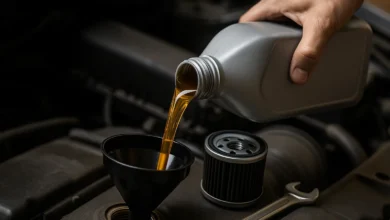
Oil lubricates, cleans, and cools internal components. Skipping an oil change is like starving your engine.
- Type: Synthetic 5W-30 (most Toyota models).
- Interval: Every 5 000 mi / 8 000 km or 6 months.
- Signs of Trouble: Dark, gritty oil, burning smell, or low dipstick level.
Always replace the oil filter alongside oil; a clogged filter traps contaminants and lowers pressure.
Pro Tip: If you drive in desert climates like the GCC, check oil every 3 000 miles — extreme heat accelerates breakdown.
9. Tires & Alignment — Where Safety Meets Efficiency
Your tires connect your car to the road, and tire maintenance directly affects handling, braking, and fuel economy.
Tire Care Steps
- Check air pressure monthly (use a digital gauge).
- Rotate tires every 5 000 mi.
- Inspect tread depth; replace if below 2/32 inch (1.6 mm).
- Align and balance every 10 000–15 000 mi.
Choosing the Right Tires
- All-season tires: balanced for comfort and wet traction.
- Performance tires: grip and handling, less lifespan.
- Off-road / all-terrain: deeper tread for gravel and sand.
Toyota Tip: Camry and Corolla perform best with 17-inch all-season tires inflated to 35 PSI; SUVs like RAV4 prefer 33 – 36 PSI.
10. Brakes — The Most Critical Safety System
Brakes degrade gradually, making it easy to overlook wear.
Check every 5 000 mi:
- Brake pad thickness (replace under 3 mm).
- Rotor surface for grooves or rust.
- Fluid color (should be clear-amber).
Replace brake fluid every 2 years regardless of mileage; moisture contamination lowers boiling point and causes fade.
11. Battery, Cooling & Electrical Systems
Battery
- Clean corrosion with baking soda and water.
- Test voltage every 6 months; 12.6 V = healthy.
- Replace every 3–5 years.
Cooling System
- Check coolant level monthly (engine cold).
- Replace fluid every 60 000 mi.
- Inspect radiator hoses for cracks or bulges.
Overheating is one of the top causes of roadside breakdowns. Always carry a spare gallon of coolant and a clean rag.
Electrical Components
Modern Toyotas include numerous sensors and computers; a weak battery can trigger false error codes. Keep terminals tight and clean.
12. Belts, Filters, and Spark Plugs
- Serpentine Belt: powers alternator and A/C; replace every 60 000 mi or when cracked.
- Air Filter: change every 15 000 mi; keeps engine breathing clean air.
- Cabin Filter: ensures healthy airflow inside; replace every 12 months.
- Spark Plugs: iridium plugs last 90 000–100 000 mi; worn plugs cause misfires and poor MPG.
Use only OEM or equivalent quality parts — cheaper replacements often fail early.
13. Fuel & Exhaust System Maintenance
Deposits accumulate in injectors and exhaust components over time.
Add a fuel-system cleaner every 10 000 mi, and periodically inspect:
- Fuel filter and lines for leaks.
- Oxygen sensors (replace at 100 000 mi).
- Catalytic converter for efficiency loss.
Keeping the system clean ensures optimal combustion and reduced emissions.
14. Seasonal Maintenance Tips
Summer (Hot Climates)
- Monitor coolant and A/C refrigerant.
- Keep tires at correct PSI to prevent blowouts.
- Shade parking or sunshade to protect interior.
Winter (Cold Climates)
- Use winter-grade oil (0W-20).
- Test battery capacity.
- Clean undercarriage to remove salt corrosion.
Rainy / Humid Seasons
- Replace wipers, check window seals.
- Ensure defroster and ventilation work properly.
15. Car Maintenance Signs You Should Never Ignore
| Sign | Possible Cause | Action |
|---|---|---|
| Oil light on | Low oil / bad sensor | Stop and check level immediately |
| High engine temp | Coolant leak / bad thermostat | Turn off A/C, stop safely, call for tow if unresolved |
| Squealing sound | Worn belt or brake pads | Inspect within 24 h |
| Hard starting | Weak battery / bad spark plug | Test battery and ignition system |
| Steering vibration | Tire imbalance / worn bushings | Alignment and balance check |
Ignoring these indicators often multiplies repair costs.
16. Common Mistakes to Avoid
- Skipping fluid checks. Fluids are the lifeblood of your car — ignoring them leads to failure.
- Over-filling oil or coolant. Too much can cause pressure buildup and leaks.
- Using non-Toyota fluids or cheap filters. Shortens lifespan and voids warranties.
- Neglecting tire rotations. Causes uneven wear and vibration.
- Waiting for problems. Proactive service saves thousands long-term.
17. Cost of Neglect vs. Cost of Maintenance
| Item | Preventive Cost | Repair Cost (If Ignored) |
|---|---|---|
| Oil change | $50 | $3 000 (engine replacement) |
| Brake fluid flush | $100 | $800 (master cylinder failure) |
| Tire rotation | $30 | $400 new tires early |
| Coolant flush | $120 | $900 radiator replacement |
| Battery replacement | $150 | $500 tow + ECU reset |
Regular care always wins economically.
18. FAQ (Schema Ready)
Q1. What is included in a full car maintenance checklist?
Oil & filter change, tire rotation, brake inspection, fluid top-up, belt and hose check, battery test, and system diagnostics.
Q2. What is Toyota’s recommended service schedule?
Every 5 000 miles for basic service and every 60 000 miles for major fluid replacements.
Q3. How often should I replace spark plugs?
Iridium plugs every 90 000–100 000 miles; standard plugs every 30 000 miles.
Q4. What are common signs my car needs maintenance?
Dashboard lights, reduced MPG, strange noises, fluid leaks, or vibration.
Q5. What is a car maintenance checklist called?
Also known as a vehicle service schedule or preventive maintenance plan.
Q6. Can I perform maintenance myself?
Basic tasks (oil, filters, tires) yes — complex jobs (brakes, transmission) should be done by certified technicians.
19. Environmental & Safety Benefits
Routine maintenance not only protects your investment but also reduces environmental impact.
A well-tuned engine emits fewer pollutants, consumes less fuel, and prevents leaks of hazardous fluids. Proper tire inflation alone can cut CO₂ emissions by 300 kg per year for the average driver.
Safety improves dramatically too — functioning brakes, balanced tires, and clear visibility reduce accident risk by 30 %.
20. Final Thoughts: Make Maintenance a Habit
Car care isn’t just about mechanics — it’s a mindset. Building a habit of monthly inspection, recording services, and following Toyota’s recommended schedule transforms ownership from stressful to effortless.
Treat your car maintenance checklist as part of your lifestyle, not a chore. Whether you drive a Toyota Corolla through city traffic or a Land Cruiser on desert roads, attention to small details today guarantees freedom and confidence tomorrow.
In summary:
- Check monthly → Prevent surprises.
- Follow Toyota intervals → Preserve value.
- Listen to warning signs → Stay safe.
Drive smarter. Maintain regularly. Your car will thank you with years of smooth, reliable performance.
.
Toyota car maintenance checklist, car maintenance checklist by mileage, car maintenance signs, car maintenance checklist template