How to Improve Your Car’s Fuel Efficiency: A Complete Step-by-Step Guide
High fuel prices make efficient driving a must. The good news: you can often gain 10–30% better mileage (and sometimes more) using a combination of smart habits, light maintenance, and small equipment tweaks—without unsafe “hypermiling” tricks. This guide covers gasoline, diesel, and hybrid cars, with clear actions ordered by impact and cost.
1) Know Your Baseline (So Improvements Are Real)
- Reset trip computer (or fill-to-fill method) and record MPG/L/100 km for two full tanks.
- Note conditions: city vs highway split, A/C usage, passengers, roof cargo, and tire PSI.
- Target: Improve the rolling average by 10% first; adjust tactics as you measure results.
2) Tire Strategy (Top 3, Lowest Cost, Big Gains)
- Correct pressure (check monthly)
- Under-inflation increases rolling resistance. Use the pressure on the door-jamb placard, not the sidewall max.
- Expect up to +3–5% MPG when correcting soft tires.
- Quality, low-rolling-resistance (LRR) tires
- When replacing, choose LRR models; real-world gains +2–4%.
- Keep tires properly sized; upsizing wider tread can hurt MPG.
- Rotate, balance, and align
- Misalignment scrubs rubber and fuel. If the wheel tugs or tread wears unevenly, align it—often +1–3%.
3) Aerodynamics & Weight (Easy Wins)
- Remove roof racks/boxes when not in use—highway penalty can be −10–20% MPG at speed.
- Close windows at highway speed; use cabin vents/A/C on low instead (open windows create drag).
- Declutter the trunk; every 45 kg (~100 lb) can cost ~1–2% MPG in stop-go driving.
- Smooth driving (see §4) does more than any single gadget.
4) Driving Habits That Save Fuel (Safest, Highest Impact)
- Gentle launches: Use about 50–60% throttle and short-shift (manual) around 2,000–2,500 RPM in gasoline cars and 1,800–2,200 RPM in diesels.
- Anticipate traffic: Look 10–15 seconds ahead; lift early to use engine braking instead of brakes.
- Keep steady speed: On flat highways, cruise control helps; on rolling hills, light manual modulation can do better.
- Speed discipline: Aerodynamic drag rises with the square of speed. Dropping from 120 → 105 km/h (75 → 65 mph) can add +10% or more MPG on many cars.
- Right-lane mindset: Drive in the lane that matches your intended pace to minimize surging and braking.
- Warm-up myth: Drive off gently after 20–30 seconds; idling wastes fuel and warms up slower.
- A/C usage: At city speeds keep A/C modest; at highway speeds A/C on low is often better than windows down.
- Avoid tailgating “drafting”: Unsafe and illegal in many regions. Tiny real gains, huge risk—skip it.
Hybrids:
- Use EV creep for parking lots and heavy traffic; avoid hard throttle that forces the engine to kick in.
- Pulse & Glide (safe version): Briefly accelerate to traffic speed, then hold a light pedal to let the engine cycle off when possible (only where safe and legal).
5) Engine & Fluids (Small Maintenance, Big Payoff)
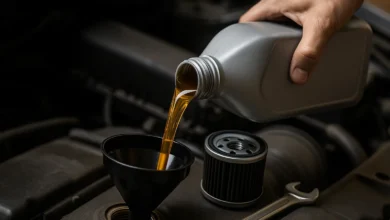
- Engine oil: Use the manufacturer-specified viscosity (e.g., 0W-20, 5W-30). Too thick increases friction; too thin may harm protection.
- Oil change intervals: Follow the “normal vs severe” schedule in your manual; old oil can increase drag and reduce efficiency.
- Air filter: Replace when dirty; a clogged filter can hurt performance (modern fuel-injection compensates but still benefits from good airflow).
- Spark plugs (gasoline): Worn plugs cause misfires and poor combustion; replace per interval—often 60–160k km.
- Ignition coils: Weak coils waste fuel; diagnose if you feel hesitation or see codes.
- MAF/MAP & throttle body cleaning: Restores proper air-fuel calculations and smooth idle.
- Coolant & thermostat: Engine at the right temperature is more efficient; a stuck-open thermostat keeps the engine cold and thirsty.
- Wheel bearings & brakes: Dragging calipers or worn bearings dramatically hurt MPG; address any burning smell or pull.
Diesel specifics:
- DPF health: Ensure proper regeneration; frequent short trips may clog filters and reduce economy.
- Fuel filter: Replace on schedule; water or debris reduces injection efficiency.
6) Sensors & Emissions Systems (Hidden MPG Killers)
- Oxygen (O₂) sensors: Slow or failed sensors force rich mixtures. If the check-engine light appears, scan and fix promptly—restores +5–15% in some cases.
- Catalytic converter: A partially clogged cat increases backpressure; symptoms include loss of power and high fuel use.
- EVAP leaks: Not just emissions—can affect trims indirectly; fix purge/vent faults.
- Tire-pressure monitoring (TPMS): Treat alerts immediately; low PSI hurts MPG and safety.
7) Fuel Quality & Additives
- Use the correct octane: Higher octane does not mean better MPG unless your engine requires it or knocks.
- Top-Tier fuel (detergent standards) can keep injectors and intake valves cleaner over time.
- Periodic injector cleaner (per manual) may help on high-mileage engines; don’t overuse.
- Diesel anti-gel only when seasonally required.
8) Transmission & Driveline
- Automatic/dual-clutch: Keep fluid serviced as specified; old ATF can cause slip and heat.
- Manual: Short-shift gently; don’t lug below recommended RPM under heavy load.
- AWD/4WD: Extra drag vs FWD/RWD. Use correct tire sizes/pressures on all corners; mismatches strain the system and hurt MPG.
9) Electrical Load Management
Alternators burn fuel to make electricity.
- Turn off unnecessary loads (seat heaters, defrosters) once they’ve done their job.
- LED bulbs reduce draw (and last longer) compared to halogens.
- Check for parasitic drains if the battery keeps dying—inefficiency and reliability issue.
10) Trip Planning & Routing
- Combine errands into one loop while the engine is warm—cold starts are least efficient.
- Avoid peak traffic where possible; idling equals 0 MPG.
- Choose routes with fewer stops, gentle grades, and speeds where your car’s best BSFC region lies (often 65–90 km/h / 40–55 mph for many vehicles).
11) Seasonal Tactics
Summer
- Use recirculate mode for quicker cool-down.
- Remove roof boxes (huge drag in highway heat).
- Fuel expands slightly; pump slowly and stop at first click (do not top off).
Winter
- Tires lose about 1 PSI per 6 °C (10 °F) drop—check more often.
- Use a block heater in very cold regions; warm oil = less friction and faster closed-loop operation.
- Clear snow from roof/hood (weight + drag).
- Short trips are worst for MPG—bundle errands.
12) Safe “Hypermiling” You Should Do
- Look far ahead and time lights; if a signal is red, lift early and roll to it.
- Coast in gear (modern EFI cuts fuel on decel) rather than neutral; you keep full brake/steer authority.
- Park to roll out: If possible, choose spots that let you leave without reversing/extra maneuvers.
Never do: drafting trucks, coasting in neutral downhill, switching off engine while moving, under-inflating/over-inflating beyond spec, or ignoring traffic laws.
13) Quick Reference Checklist (Print This)
Weekly
- Visual tire check; remove roof clutter; plan routes.
Monthly
- Measure and set tire PSI (cold).
- Inspect air filter; scan for stored codes; clean out trunk.
Every 6–12 months (or per manual)
- Oil and filter service; rotate tires; check alignment feel.
- Cabin filter (helps A/C efficiency); brake inspection.
As needed
- Spark plugs/ignition components; transmission and coolant service; MAF/throttle clean; injector cleaner.
14) Simple Math: Turn MPG Into Money
Use this quick formula to estimate savings:
Savings per month = (Old L/100 km − New L/100 km) × (Distance km ÷ 100) × Fuel price per liter
Example:
Old 9.0 → New 7.8 L/100 km over 1,500 km/month with fuel at 2.6 SAR/L
= (9.0−7.8)=1.2 × 15 × 2.6 ≈ 46.8 SAR/month saved.
Scale for your mileage; many readers see far more when combining tips.
15) FAQs
Q1: What single change gives the biggest improvement?
Keeping correct tire pressure and controlling speed typically deliver the fastest, safest gains.
Q2: Does premium fuel increase MPG?
Only if your engine is designed for it or is knock-limited. Otherwise, it usually doesn’t pay back the price difference.
Q3: Is it better to idle the A/C or open windows?
City speeds: windows slightly open may be okay. Highway: A/C on low is typically more efficient than wide-open windows.
Q4: How often should I check tire pressure?
At least once a month and before long trips; more often during temperature swings.
Q5: My car is new—do I still need these tips?
Yes. Even modern cars lose MPG from soft tires, roof boxes, aggressive driving, and overdue services.
Q6: Do engine tuners/chips improve economy?
Be cautious. Some re-maps can help on diesels under steady loads, but many increase power at the expense of reliability, emissions compliance, or insurance coverage.
Q7: What about start-stop systems?
They can save fuel in heavy traffic. Keep the 12 V battery healthy to avoid system disablement.
16) Summary: Your 7-Day Efficiency Action Plan
Day 1: Measure baseline; set tire PSI to placard; remove roof rack/extra weight.
Day 2: Gentle launches, hold steady speeds, plan routes; use cruise on flats.
Day 3: Oil level/condition check; air filter inspection; scan for codes.
Day 4: Align if the car pulls; rotate tires if due.
Day 5: Clean MAF/throttle (if applicable); verify coolant temp reaches normal.
Day 6: Practice anticipation: lift early, minimize braking.
Day 7: Review MPG; keep what worked; set a reminder to recheck PSI monthly.
Apply these steps and you’ll lock in real, repeatable savings—while making your car last longer and drive better.
Official Sources for Further Reading: