
Mushroom Coffee vs Regular Coffee: Focus, Side Effects, and Taste Tests
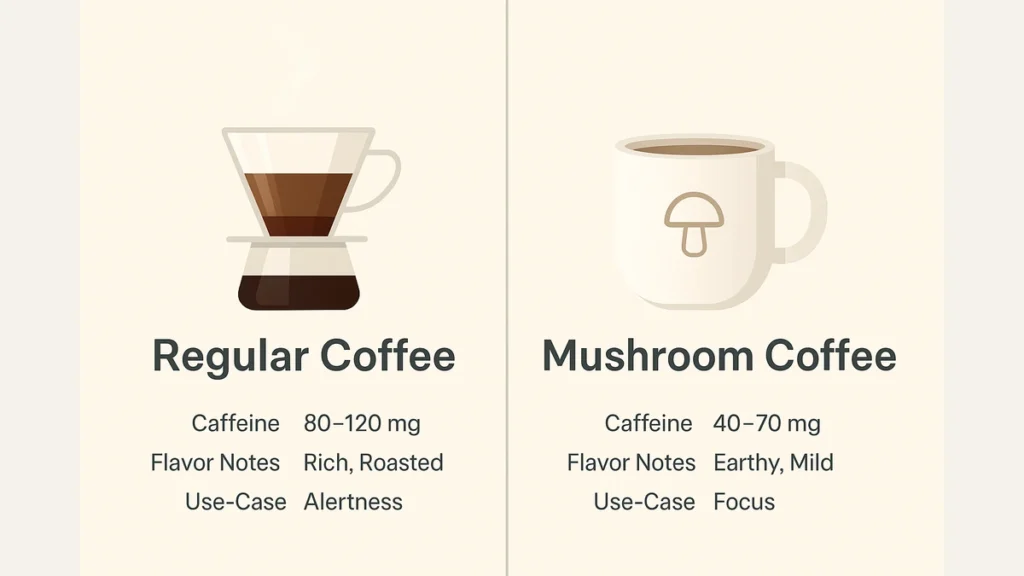
Table of Contents
Summary: Mushroom coffee blends traditional coffee with extracts of “functional” mushrooms such as lion’s mane, chaga, reishi, and cordyceps. Marketers claim smoother energy, cognitive support, and fewer jitters than a standard cup of joe. Regular coffee, meanwhile, remains the most evidence-backed stimulant in daily life, prized for alertness, taste, and ritual. This guide takes a pragmatic, brand-agnostic look at both options. We’ll unpack how they’re made, what they can and can’t do, who should avoid them, how they actually taste, how much they cost, and how to run a fair, repeatable taste test in your own kitchen or content studio.
1) What Counts as “Mushroom Coffee” in 2025?
Definition (practical): Mushroom coffee is coffee that includes a measured portion of mushroom extract powder, usually from lion’s mane (Hericium erinaceus), chaga (Inonotus obliquus), reishi (Ganoderma lucidum), cordyceps (Ophiocordyceps militaris or sinensis), or a blend of these. The extracts are typically standardized to certain polysaccharides, beta-glucans, or other marker compounds. Most consumer products are coffee-first (i.e., you still taste coffee), with mushroom actives designed to complement, not replace, the caffeine buzz.
What it is NOT:
- It is not psilocybin or any hallucinogenic mushroom.
- It is not simply “ground dried mushrooms” tossed into coffee; reputable blends use extracts for potency and solubility.
- It is not decaf by default—though many blends run lower in caffeine than an average cup of regular coffee.
Typical caffeine range: Many mushroom-coffee servings land around 40–70 mg of caffeine per 8 oz cup when brewed per label directions (because there’s less actual coffee per serving compared with a normal scoop of grounds). Some blends, however, use full-strength coffee plus mushrooms and therefore approach 90–120 mg per cup. Always read the label.
Common mushroom roles claimed by brands:
- Lion’s mane: cognitive support, focus, “mental clarity.”
- Chaga: antioxidant support and a darker, roasty backdrop.
- Reishi: calm, stress balance, sleep-friendliness when consumed earlier in the day.
- Cordyceps: stamina, oxygen efficiency, pre-workout perk without a harsh spike.
Standardization & sourcing notes:
- Extracts may be derived from fruiting bodies (the actual mushroom) or mycelium (the root-like network grown on grain). Purists prefer fruiting-body extracts; proponents of mycelium note different metabolite profiles and scalability.
- High-quality blends disclose extraction ratios (e.g., 8:1, 10:1), third-party tests, and mushroom part used.
- Heat-stable extracts are preferred if you’ll brew with near-boiling water.
2) Regular Coffee 101: From Bean to Brew
Why regular coffee endures: It’s predictable, flavorful, fast, and widely available. The caffeine content is well understood, and the beverage has centuries of culinary and cultural momentum.
Caffeine content basics: A typical 8 oz cup brewed at home averages ~80–120 mg of caffeine depending on roast, grind, brew method, and dose of grounds. Espresso shots range widely but often around 60–80 mg per 1–1.5 oz shot. Cold brew concentrates can be far higher per ounce but are usually diluted.
What affects strength:
- Ratio: grams of coffee to grams of water (a common starting point is 1:15 to 1:17 for pour-over).
- Grind size: finer for espresso, medium-fine for pour-over, coarse for French press.
- Contact time and temperature: hotter/longer generally extracts more.
- Bean origin and roast: robusta beans carry more caffeine than arabica; dark roasts taste “stronger” but don’t necessarily deliver more caffeine than lighter roasts per gram.
Flavor language in coffee: Acidity (brightness), sweetness, bitterness, body (mouthfeel), aroma (floral, nutty, chocolate, fruit), clarity (especially in pour-overs), and aftertaste. This vocabulary becomes useful in structured taste tests later in the article.
3) Caffeine & Focus: What the Effects Feel Like in Real Life
The regular coffee experience
For many people, regular coffee provides a clean, immediate alertness within 15–30 minutes of a serving. The effect profile can be summarized as:
- Pros: faster reaction time, improved vigilance, better sustained attention for mundane or repetitive work, stronger workout motivation.
- Cons: jitters or edginess if fasted or overdosed; mid-morning or mid-afternoon slump if you spike and crash; potential sleep disruption if consumed late in the day.
Who thrives on it: Early-morning commuters, heavy knowledge workers during focus sprints, athletes in pre-training windows, and anyone who values a noticeable kick.
Dose control tips: If you’re sensitive, consider smaller, more frequent cups or combine caffeine with food to blunt spikes. Some people pair coffee with L-theanine (often 100–200 mg) for a calmer curve; others simply favor milk/oat lattes that slow absorption.
The mushroom coffee experience
Mushroom coffee typically offers a gentler rise, especially when the caffeine per serving is lower. Subjectively, users often report:
- Pros: lighter stimulation, fewer jitters, less racing heart, a slightly more “even” energy profile, and sometimes a sense of cognitive “smoothness.”
- Cons: weaker impact if you are accustomed to full-strength coffee; variability among brands; and flavor differences (earthy/woodsy notes) that some love and others don’t.
Who thrives on it: People who are caffeine-sensitive, those who want a second cup later in the day without sleep penalties, creators seeking calm focus rather than an adrenaline spike, and office teams that want a mid-afternoon lift without palpitations.
Important nuance: The “focus” reputation of lion’s mane and other functional mushrooms comes from a mixture of tradition, mechanistic hypotheses, and small human studies. Regardless of mechanistic debates, the practical effect most drinkers feel is usually attributable to lower caffeine plus a ritual and taste they enjoy. If you need a guaranteed, punchy alertness for a deadline or a demanding workout, regular coffee is the safer bet.
4) Side Effects, Interactions, and Who Should Avoid What
Regular coffee: common issues and mitigations
- Jitters, anxiety, or tremor: reduce dose, pair with food, or try smaller “split” servings.
- GI upset/acid reflux: go with a coarser grind, cooler brew (e.g., cold brew), or a lower-acid bean; avoid drinking on an empty stomach.
- Sleep disruption: caffeine’s half-life is typically 4–6 hours; set a caffeine curfew 8–10 hours before bedtime if you’re sensitive.
- Interactions: consult a clinician if you’re on certain medications (e.g., stimulants) or have arrhythmias. Moderation is key.
Mushroom coffee: the extra variables
Beyond caffeine considerations, mushroom coffee introduces botanical extracts. While generally well tolerated, keep these points in mind:
- Allergies and sensitivities: Some people react to mushrooms or to the carriers used in extracts.
- Chaga considerations: chaga naturally contains oxalates; very high intake in concentrated forms has been raised as a theoretical kidney risk. Anyone with a history of kidney stones or kidney disease should consult a healthcare professional and avoid heavy use.
- Bleeding/medication cautions: Certain mushroom extracts have been discussed in the context of platelet or glucose modulation. People on blood thinners or diabetes medications should discuss mushroom supplements with their clinician.
- Pregnancy & lactation: Because controlled data are limited for many botanicals, prudent avoidance or medical guidance is wise.
- Sourcing variability: The market includes excellent, well-tested products—and also vague blends. Choose brands that disclose fruiting body vs. mycelium, extraction ratio, active compound standardization, and third-party testing.
Non-medical disclaimer: The above is educational and not medical advice. If you have any chronic conditions, are on medication, are pregnant, or have a mushroom allergy, talk to your healthcare provider before using mushroom-based beverages or supplements.
5) Taste and Aroma: What to Expect in the Cup
Regular coffee flavor profile
- Aromatics: Depending on origin and roast, you might get cocoa, caramel, nuts, stone fruit, citrus, florals, or baking spices.
- Body and clarity: Pour-overs often emphasize clarity with a silky body, while French press yields a heavier body with more oils.
- Aftertaste: High-quality beans produce a lingering sweetness or pleasant dryness, not a burnt bitterness.
Mushroom coffee flavor profile
- Base note: still coffee, but with a soft earthy/woodsy undertone, especially with chaga or reishi.
- Bitterness: poorly formulated blends can taste overly bitter or medicinal; high-quality blends integrate the mushrooms as a subtle layer.
- Milk pairing: oat/almond milk and a dash of maple or honey help balance earthy edges without burying the coffee character.
- Roast choice: medium roasts often harmonize best—dark roasts can amplify bitterness; very light roasts can clash with earthy notes.
Practical tip: If you’re new to mushroom coffee, start with a 25–50% mushroom blend (e.g., one-half serving of mushroom coffee topped up with a half-serving of regular pour-over). Adjust upward only if you like the flavor and the lighter stimulation.
6) Brewing Methods: Getting the Best from Each
For regular coffee
- Pour-Over (V60/Chemex): Aim for a 1:15–1:16 ratio (e.g., 20 g coffee to 300–320 g water) at 92–96°C. Grind medium-fine. Pour in stages to control extraction and keep the bed flat.
- French Press: 1:15 ratio, coarse grind, 4 minutes steep, gentle plunge. Expect more body and oils.
- Espresso: Dial in dose/yield/time (e.g., 18 g in → 36 g out in ~28–32 sec). Lighter roasts may need higher temperatures and longer times.
- Cold Brew: Coarse grind, 1:5 to 1:8 concentrate brewed 12–18 hours, then dilute to taste. Lower acidity, smooth mouthfeel.
For mushroom coffee
- Instant-style blends: Many mushroom coffees are formulated to dissolve in hot water at 80–96°C. Avoid boiling water to reduce bitterness. Whisk for even dispersion.
- Ground blends (brew like coffee): If your product is a ground-coffee blend with mushroom extract, brew as you would a regular medium roast. Consider a slightly coarser grind than usual to avoid over-extraction of bitter notes.
- Latte approach: Mushroom coffee often shines in a latte format. Steam milk or heat your plant milk to ~60–65°C, add small amounts of sweetener/spice (cinnamon, cardamom), and pour over the brewed base.
- Iced variations: Shake brewed mushroom coffee with ice and a touch of simple syrup; the cold temperature mutes earthiness and highlights cocoa notes.
Water quality matters: Whether you make regular or mushroom coffee, use filtered water around 75–150 ppm TDS. Bad water ruins good beans—and will also exaggerate bitterness in mushroom blends.
7) Cost per Cup, Value, and “Return on Energy”
Regular coffee cost drivers: Beans (quality, origin), roast freshness, brew method waste (espresso purges), and equipment amortization. Buying whole beans in 1 kg bags and brewing at home typically yields $0.15–$0.50 per 8 oz cup depending on bean grade and region.
Mushroom coffee cost drivers: Extract sourcing, standardization, third-party testing, brand positioning, and packaging. Expect $0.80–$2.50 per serving for reputable products. Some premium lines exceed that, especially when using multiple standardized extracts or single-origin coffees.
Value calculus: Price per cup is only half the story. Consider “return on energy” (ROE): how well the drink supports your desired state without side effects. If regular coffee gives you perfect focus with zero jitters, its ROE is hard to beat. If you’re caffeine-sensitive and mushroom coffee lets you work steadily without anxiety, its higher price may be trivial compared with the productivity and comfort gains.
Budget hacks:
- Blend your own ratio: 75% regular + 25% mushroom can cut costs and let you tune flavor and stimulation.
- Buy larger bags or multi-packs; watch unit pricing.
- Use scales to avoid overdosing grounds; wasted coffee is wasted money.
8) Use-Cases: Which Cup Suits Which Situation
Choose regular coffee when…
- You need fast, noticeable alertness for a demanding task, driving, or gym session.
- You’re accustomed to standard caffeine levels and tolerate them well.
- You love the nuanced origin flavors and enjoy experimenting with brew recipes.
Choose mushroom coffee when…
- You’re caffeine-sensitive or want a lighter second cup later in the day.
- You prefer a smoother energy curve and can live with a gentler effect size.
- You like the flavor or the latte format that softens earthy notes.
- You’re curious about functional mushrooms and want a culinary way to try them.
Hybrid strategy (popular with teams)
Morning: regular coffee to kick off the day.
Mid-afternoon: mushroom coffee for gentle focus without risking sleep.
Evening: herbal options or decaf if you want the ritual.
9) A Repeatable Taste-Test Protocol (for Reviews and Content)
Whether you’re a blogger, creator, or simply a curious drinker, a structured method makes your comparisons credible and easy to reproduce.
Equipment Checklist
- Digital scale (0.1 g precision)
- Kettle with temperature control
- V60 or Kalita (or a French press if that’s your norm)
- Two identical mugs
- Timer and notebook (or a spreadsheet)
- Optional: refractometer for TDS, but not necessary
Sample Selection
- Pick two mushroom coffees (one instant, one ground blend) and two regular coffees (one medium roast, one dark).
- Store all samples in airtight containers away from heat and light.
Brew Parameters
- For pour-over: 20 g coffee to 320 g water (1:16), 93°C, medium-fine grind.
- For mushroom instant: follow label dose; if it’s very concentrated, dilute to ~320 g total beverage to match volume and mouthfeel.
- Maintain identical brew water, temperature, and cup pre-warming.
Blind Setup
- Label cups on the bottom (A/B/C/D).
- Ask a friend to randomize pours so you don’t know which is which.
Scoring (1–10 each)
- Aroma (dry/wet)
- Sweetness
- Acidity/Brightness
- Bitterness (pleasant vs. harsh)
- Body/Mouthfeel
- Flavor Clarity (clean vs. muddy)
- Aftertaste (pleasant duration)
- Balance (do components harmonize?)
- Distinctiveness (would you recognize it?)
- Overall enjoyment
Notes to capture
- Any earthy/woodsy qualities and whether they feel integrated or separate from coffee.
- Whether milk improves or worsens flavor.
- Jitter perception 20–40 minutes after drinking; crash perception at the 2-hour mark.
- For content creators: capture overhead shots, steam, and pour footage; overlay scores in post.
Publishable Outputs
- A simple table of scores.
- Short tasting descriptors for each sample.
- A one-paragraph verdict: “Who will love this, who won’t, and how to brew it better.”
10) Decision Matrix & Quick Picks
| Primary Goal | Best First Choice | Why | Brewing Tip |
|---|---|---|---|
| Fast, reliable alertness | Regular coffee | Strong, predictable caffeine; widely loved flavor | Pour-over 1:16, 93°C, fresh medium roast |
| Smooth energy, fewer jitters | Mushroom coffee | Lower caffeine per cup; calmer feel | Latte format with oat milk; avoid boiling water |
| Mid-afternoon focus without sleep penalty | Mushroom coffee | Gentler stimulation curve | Half-dose in 200–250 ml hot water |
| Flavor exploration | Regular coffee | Terroir, processing, roast profiles | Try single origins side-by-side |
| Budget per cup | Regular coffee | Lowest cost at home | Buy whole beans in bulk; store well |
| Content reviews/taste videos | Both | Interesting contrast for your audience | Run the blind protocol and share your scores |
Bottom line: If you love the ritual and kick of coffee, don’t feel pressured to switch. If caffeine sensitivity is holding you back—or you simply want a different vibe after lunch—mushroom coffee can be a smart, flavorful tool. Many readers ultimately keep both on hand.
11) Frequently Asked Questions (FAQ)
Q1: Is mushroom coffee healthier than regular coffee?
It depends on what “healthier” means for you. If you tolerate caffeine poorly, a lower-caffeine mushroom blend can feel healthier because you avoid jitters, palpitations, and sleep disruption. If you tolerate caffeine well and enjoy the cardiovascular and cognitive associations seen in coffee research, regular coffee is already a strong choice. Either way, moderation and quality sourcing matter.
Q2: Does mushroom coffee improve focus?
Some people report a smoother, calmer focus—largely because of lower caffeine per serving and personal expectation effects. Claims for cognitive benefits from specific mushrooms (like lion’s mane) are intriguing but not definitive; your experience will depend on dose, product quality, and your own sensitivity.
Q3: Can I mix mushroom coffee with regular coffee?
Yes, and it’s a great way to customize flavor and stimulation. Start around 25–50% mushroom coffee to 50–75% regular coffee. Adjust until you find your sweet spot.
Q4: Will mushroom coffee keep me awake at night?
It still contains caffeine unless explicitly labeled decaf. Many blends run lower than a typical cup, so they’re often better for late-afternoon sipping than regular coffee, but individual sensitivity varies. Set a caffeine curfew if sleep is a priority.
Q5: Are there any serious risks with mushroom coffee?
Most healthy adults tolerate reputable products well. However, people with kidney issues, on blood thinners or diabetes medications, or with mushroom allergies should consult a clinician and consider avoiding certain extracts (especially chaga) or heavy use. During pregnancy or lactation, get personalized medical advice.
Q6: What does mushroom coffee taste like?
Like coffee—with an earthy, woodsy undertone. High-quality blends integrate smoothly; low-quality ones can taste medicinal or bitter. Milk or plant milk often improves balance.
Q7: What should I look for on the label?
Active mushrooms and parts used (fruiting body vs. mycelium), extraction ratio, standardization markers (e.g., % beta-glucans), caffeine per serving, third-party testing, country of origin, and clear brew directions.
Q8: Can athletes use mushroom coffee before workouts?
Yes, if you respond well to it. Cordyceps-containing blends are popular for a subtle pre-workout lift without a spike. If you want a guaranteed, strong kick for high-intensity efforts, regular coffee (or espresso) is more predictable.
Q9: Is decaf mushroom coffee a thing?
Yes—some brands offer decaf bases with mushroom extracts. Expect minimal stimulation and a flavor closer to decaf coffee with earthy nuance.
Q10: If I only buy one, which should I choose?
If you’re new to both categories, buy a good medium-roast coffee for mornings and a well-reviewed mushroom blend for afternoons. Test each for a week and track your focus, mood, and sleep.